着火了 他身上着火了
“Fire! He's on fire!”
THE DIALOGUE REEL
正身
“Zhengshen!”
着火了 他身上 着火了
“Fire! He's on fire!”
他着火了
“He's on fire!”
Direct spoken expression in this communicative setting.
Short, repetitive predicate clauses are universally deployed in Chinese speech to grab instant attention during fatal threats.
LEARNING CHUNKS & PARTICLES
on fire; caught fire
A vital emergency alert shouted when detecting a blaze or someone burning.
on one's body
Commonly used to specify that an object, clothing, or fire is directly on someone.
Marks the sudden emergence of a critical state, heightening urgency.
VOCABULARY & EXPRESSIONS
Parallel Spoken Cinema Scenes (语义近邻切片)
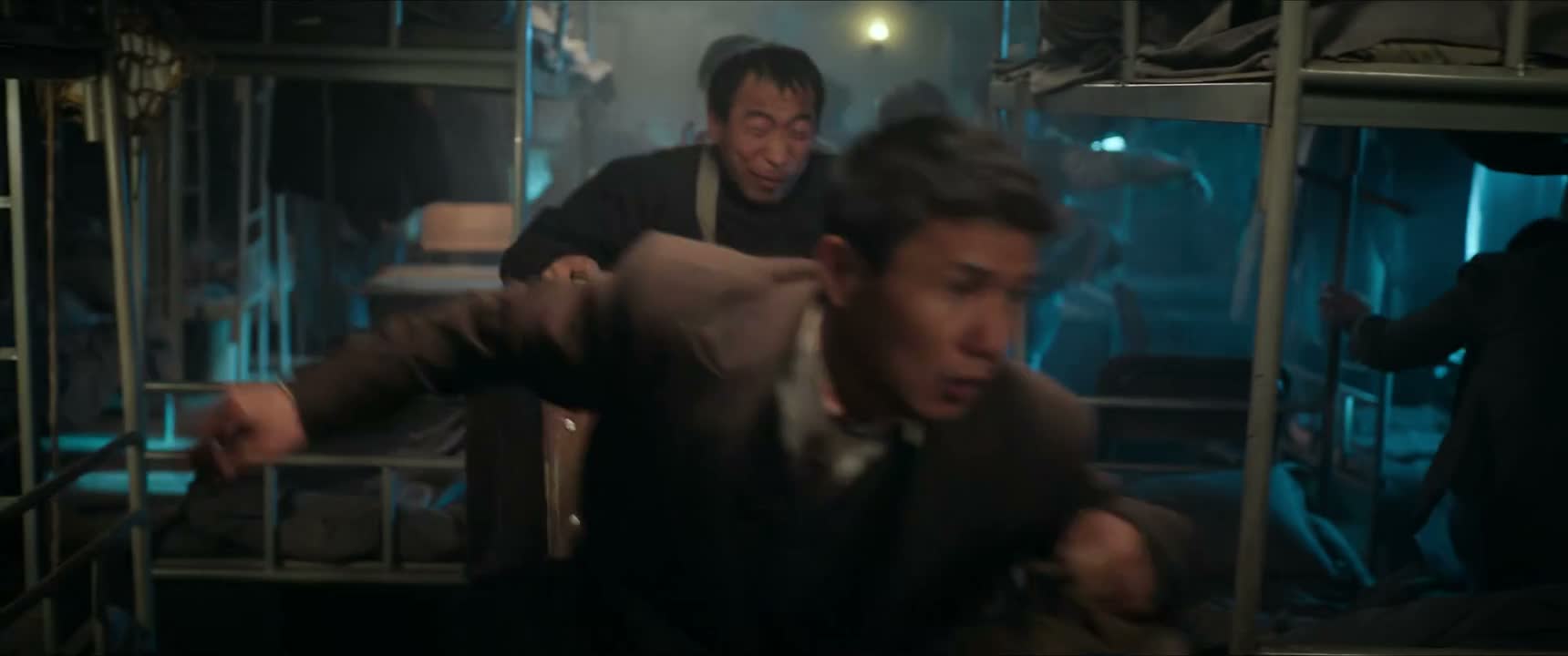
“Fire! Fire!”

“Fire! Help!”

“Fire! Somebody help!”

“Fire! He wants to burn us to death.”

“Fire!”
“Fire!”