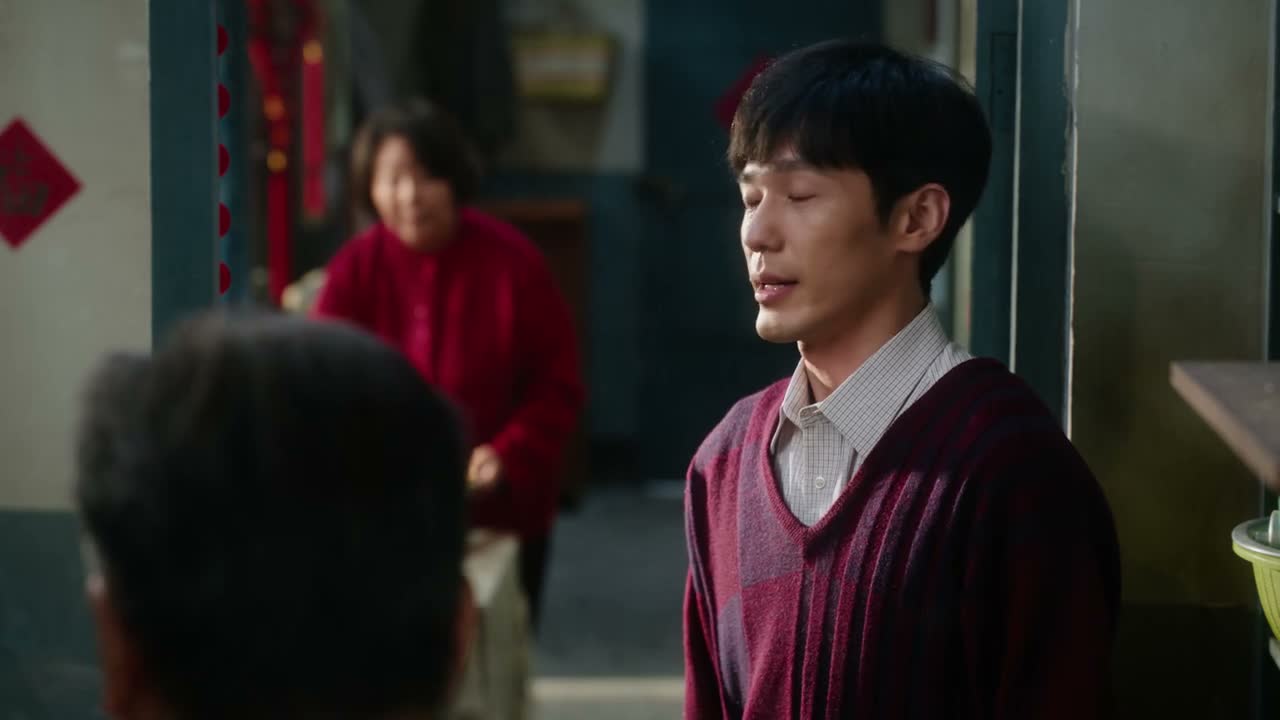
行 何主管平时没少照顾我
“Sure. Ms. He has always looked out for me.”
THE DIALOGUE REEL
你要不也去看看
“People from the company already visited her this morning. Why don't you go see her, too?”
行 何主管 平时 没少照顾 我
“Sure. Ms. He has always looked out for me.”
Direct spoken expression in this communicative setting.
In Chinese workplace culture, returning kindness and showing concern during a supervisor's illness is an essential duty of interpersonal loyalty and reciprocity.
LEARNING CHUNKS & PARTICLES
ordinarily / usually / in normal times
Used to describe habitual support or ongoing circumstances over an extended period.
has taken care of (someone) a great deal
A classic litotes construction ('did not less care') expressing deep gratitude for ongoing mentorship or support.
VOCABULARY & EXPRESSIONS
Parallel Spoken Cinema Scenes (语义近邻切片)

“please call me. My number is right here. Okay.”

“Sure. If you're okay, I'm fine with it.”

“Okay, as long as you have them.”

“Fine. If you can't handle it, come find me.”

“Okay. Listen. Don't report to Director Dai.”
“Fine, I can't do anything.”