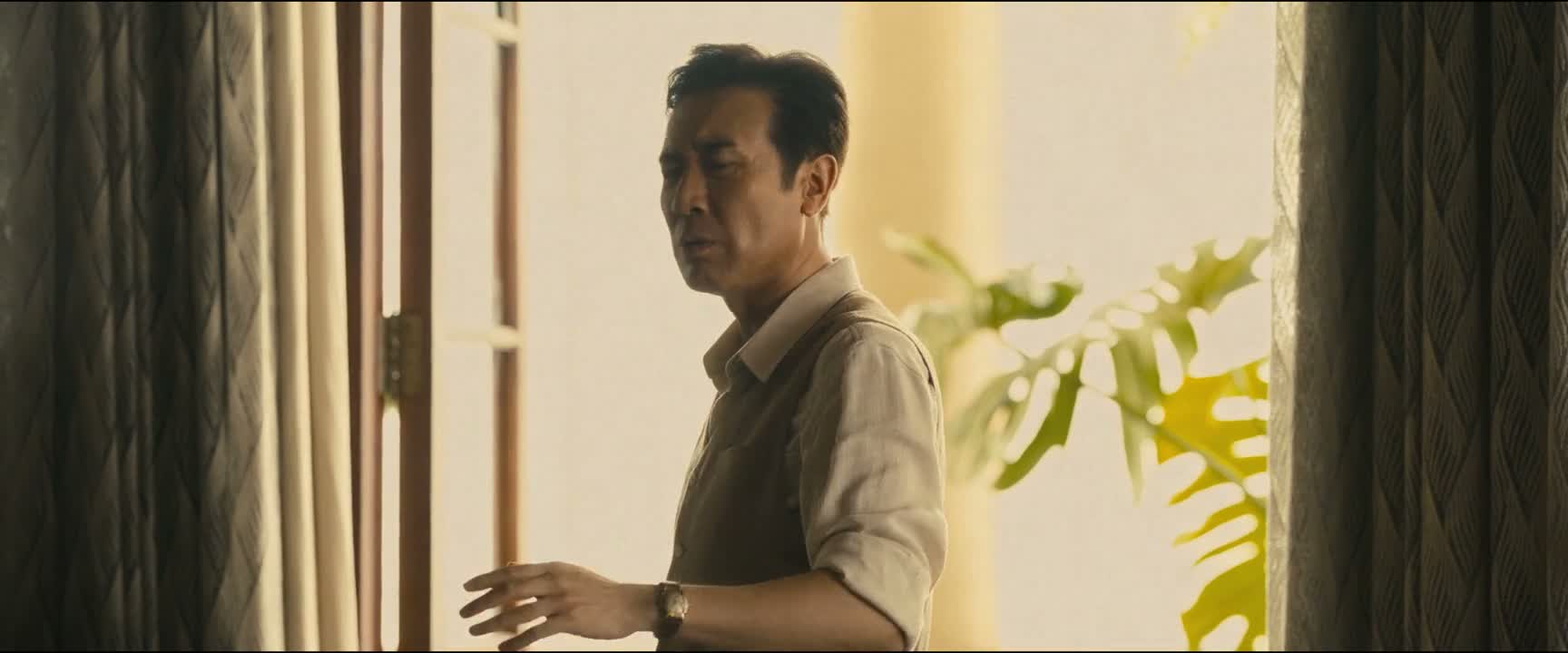
跟我们一起吃包子才是 今日为何不留啊
“to eat buns with us. Why aren't you staying today?”
THE DIALOGUE REEL
这要是搁以往 你早就高兴得不得了了 非要留下来
“If it had been in the past, you would have been thrilled. You would have insisted on staying”
跟 我们一起 吃包子 才是 今日 为何不留 啊
“to eat buns with us. Why aren't you staying today?”
两个包子
“Two buns”
“You always jump at the chance to stay—what's bothering you today?”
Offering simple food and encouraging someone to stay is a core expression of warmth and closeness in Chinese daily life; turning it down usually signals an unusual situation.
LEARNING CHUNKS & PARTICLES
that would be the right/expected thing to do
Placed at the end of a clause to assert that an action fits expectations or norms.
why not stay
A semi-formal or literary spoken inquiry asking why a guest declines hospitality.
Softens the direct inquiry into a warm, mildly curious, and affectionate question.
VOCABULARY & EXPRESSIONS
Parallel Spoken Cinema Scenes (语义近邻切片)

“Why didn't you say so sooner? I didn't bring Baozi today.”

“You won't run off early again today, right?”
“But my stuffing is different today. I won't eat any stuffing.”

“Delicious buns, of course. But you have to stay”