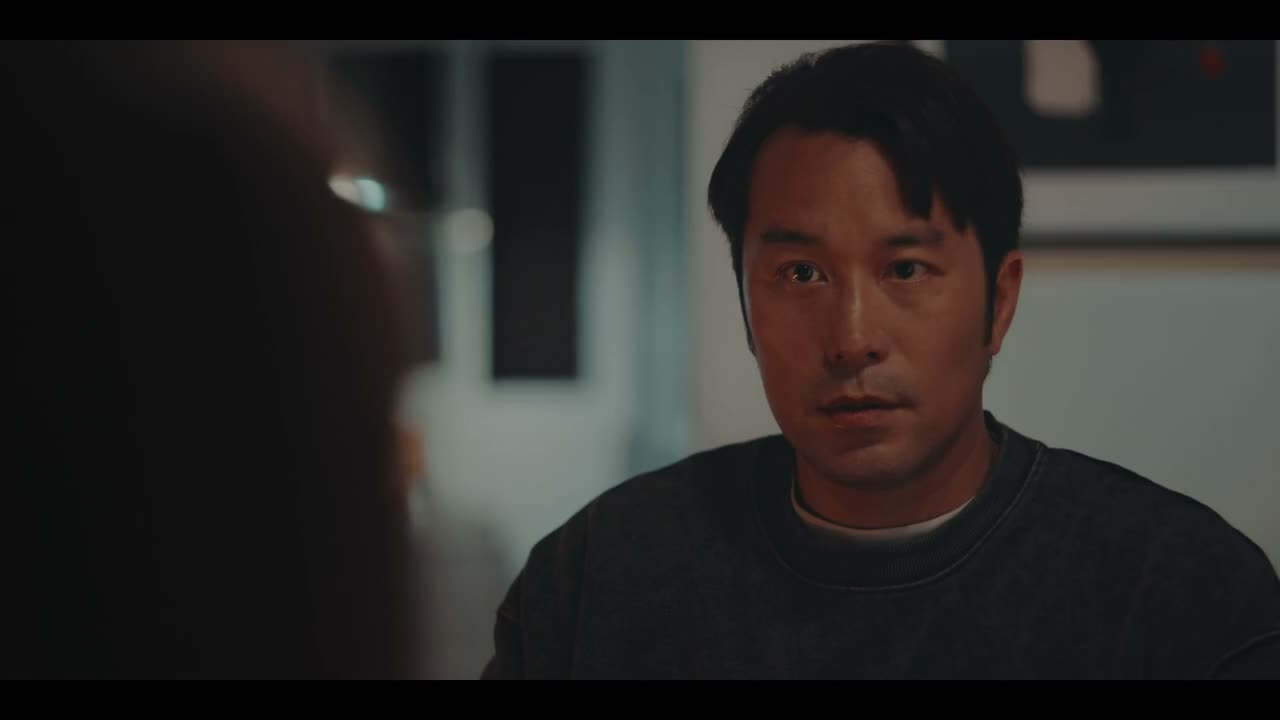
但到头来我什么都做不了
“But in the end, I couldn't do anything.”
THE DIALOGUE REEL
“I could change the course and everything myself.”
但 到头来 我 什么都做不了
“But in the end, I couldn't do anything.”
“I couldn't even protect my own child.”
Direct spoken expression in this communicative setting.
The narrative contrast between trying to defy destiny ('逆天改命') and ultimate failure reflects traditional fatalistic tensions between personal will and unyielding institutional or karmic power.
LEARNING CHUNKS & PARTICLES
in the end / ultimately
Commonly used to mark a disappointing or futile outcome after extensive effort.
can do nothing at all
A very common everyday pattern expressing absolute impotence or incapacity.
Combined with '做不' to express inability to achieve an action, emphasizing a realized state of complete impotence.
VOCABULARY & EXPRESSIONS
Parallel Spoken Cinema Scenes (语义近邻切片)

“I... I can't do anything!”

“I won't be able to accomplish anything.”
“No matter how hard I tried, I could never make it right.”

“I'm completely stuck now.”

“So there's nothing I can do?”

“My mom says I can't do anything or accomplish anything.”