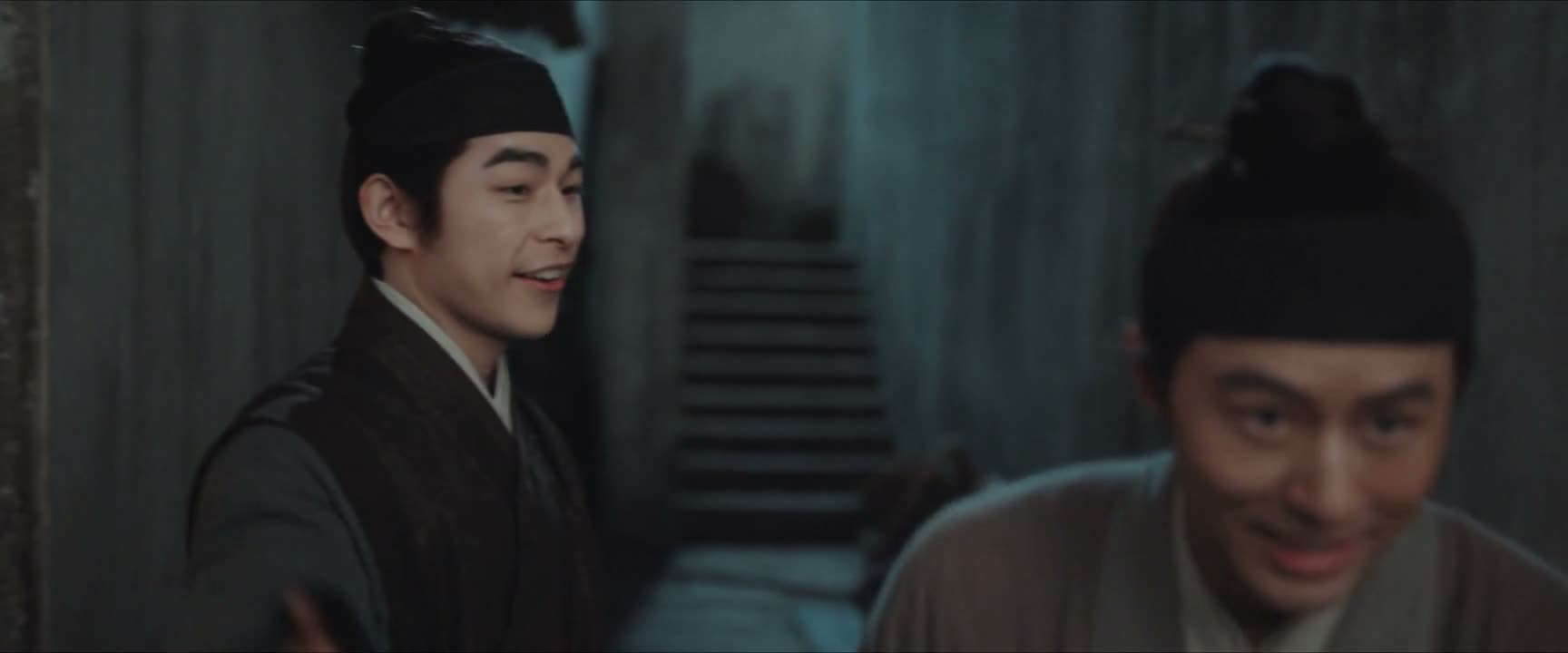
《Archives: The Nanyang Mystery》 S1·E4 (20:49)
HSK 4
jiě shì yī xià nǐ gāng cái shuō de huà ba
解释一下你刚才说的话吧
“Explain what you just said.”
《Archives: The Nanyang Mystery》
S1·E4
TIMECODE: 20:49
·
1080P MASTER AUDIO
THE DIALOGUE REEL
[-1] PREVIOUS TURN
kàn kàn ba
看看吧
“See him about it.”
jiě shì yī xià nǐ gāng cái shuō de huà ba
CURRENT FOCUS
解释一下 你刚才 说的 话吧
“Explain what you just said.”
[+1] FOLLOW-UP TURN
dǒng xiǎo jiě
董小姐
“Miss Dong.”
Subtitles synced to millisecond timecode
Browse Show Clips →
Scene:
Crisis & Conflict
Function:
DEMANDING EXPLANATION
Tone:
DEMANDING
Emotion:
SUSPICION
WHAT THEY REALLY MEAN (PRAGMATIC SUBTEXT)
“You better have a very good reason for what you just said.”
💡 Cultural Insight: Indirect Confrontation Softening
Even when demanding answers in tense moments, Chinese speakers often employ tentative structures like '一下' and particle '吧' to preserve a thin layer of decorum.
INTENT TAGS:
#confrontation
#demanding_explanation
#interrogation
#probing
🧩
2 CHUNKS · 1 PARTICLES
LEARNING CHUNKS & PARTICLES
解释一下
SPOKEN CHUNK
explain for a moment / give an explanation
A very common pattern using the tentative reduplication verb + 一下 to soften or formulate a direct request.
刚才说的话
SPOKEN CHUNK
the words said just now
Used to explicitly reference someone's preceding remark in an inquiry or confrontation.
Modal Particle「吧」 (ba)
CHANGE OF STATE
Softens an imperative sentence into an expectant demand or prompt.
🏮
2 EXPR · 0 GRAMMAR
VOCABULARY & EXPRESSIONS
COLLOQUIAL EXPRESSIONS:
CROSS-CINEMA CORPUS BOARD · PARALLEL SCENES
EXPLORE BY SEMANTIC SIMILARITY
Parallel Spoken Cinema Scenes (语义近邻切片)

《Archives: The Nanyang Mystery》 S1·E4 (20:49) · Authentic Cinema Dialogue Corpus