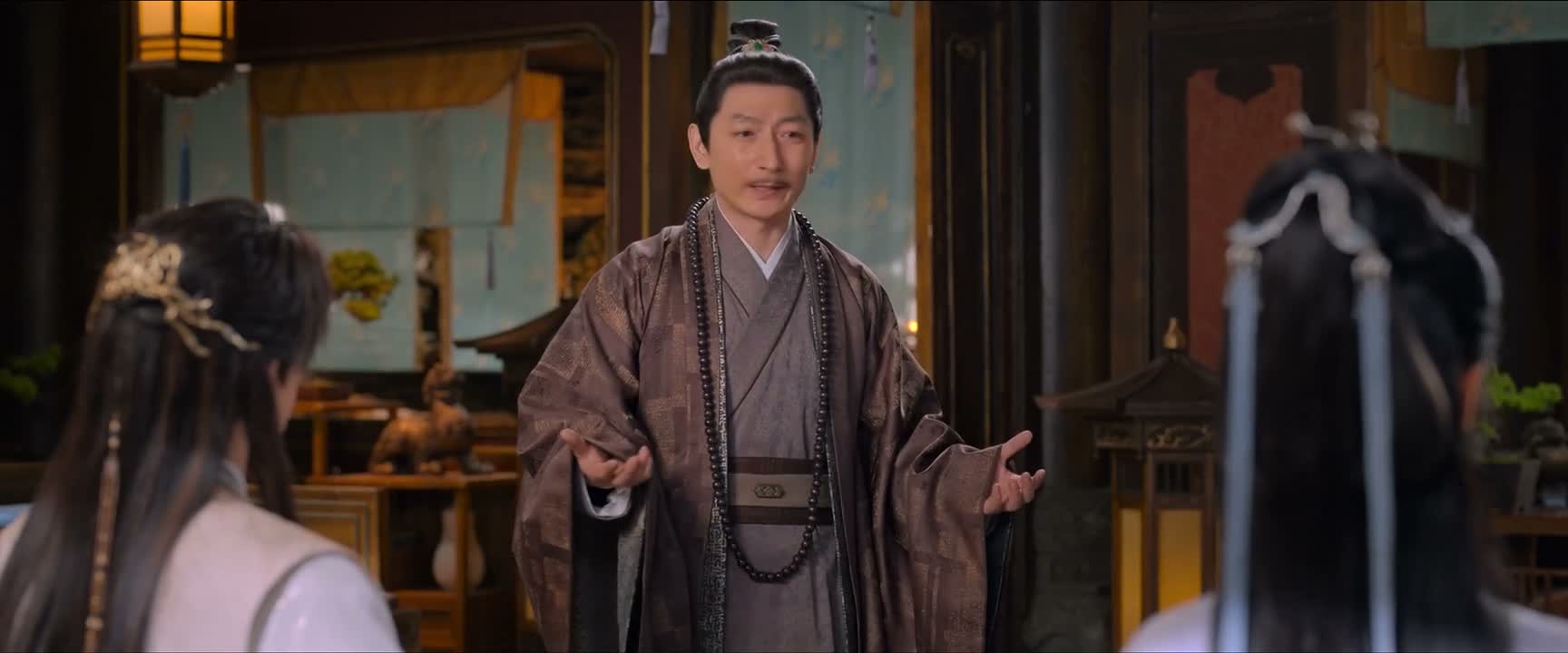
你就写邪神祖庭被炸烂了 是我的锅
“Just write that it was my fault that the Evil God's ancestral shrine had been blown to pieces.”
THE DIALOGUE REEL
给师父的报告啊
“The report to our mentor, of course.”
你就写邪神祖庭被炸烂了 是我的锅
“Just write that it was my fault that the Evil God's ancestral shrine had been blown to pieces.”
但邪神也被我解决了
“But I also took care of the Evil God.”
Direct spoken expression in this communicative setting.
In contemporary Chinese slang, taking the blame is referred to as 'carrying the pot' (背锅), while accepting responsibility casually is phrased as 'it's my pot' (是我的锅).
LEARNING CHUNKS & PARTICLES
it is my fault / I take the blame
Extremely popular slang derived from 'beiguo' (carrying the black pot), used casually to take responsibility.
blown completely to smithereens
A colloquial and vivid way to describe something completely destroyed by explosion.
VOCABULARY & EXPRESSIONS
Parallel Spoken Cinema Scenes (语义近邻切片)

“And this ancestral shrine of Evil God was the one I...”

“The Evil God's ancestral shrine has been blown up. No one will die there anymore.”

“Could this be the thing the Evil God lured people here to dig up?”

“Why leave before the Evil God statue was fully burned?”
“Then we have the evil sect, which is also uncontrollable.”

“Did that Evil God statue move just now? It moved. I saw it.”