咋了我不跟你们一块走 你们不会走道了
“What? Can't you walk without me?”
THE DIALOGUE REEL
你们走你们的呗
“You can just go.”
咋了 我 不跟 你们 一块走 你们 不会走道了
“What? Can't you walk without me?”
这个你拿着
“Take this.”
“Stop fussing over me and just get going.”
Northern Chinese humor often uses feigned annoyance or blunt rhetorical questions to mask genuine concern, camaraderie, or affection.
LEARNING CHUNKS & PARTICLES
what's wrong? / what's up?
Informal northern colloquial greeting or query replacing standard 怎么了.
walk together / leave together
Common casual phrasing for departing or walking together as a group.
to walk
Dialectal and northern colloquial equivalent of 走路.
Functions in '咋了' to ask about an emerging state, and at the end of the rhetorical clause to signal a hypothetical resulting condition.
VOCABULARY & EXPRESSIONS
Parallel Spoken Cinema Scenes (语义近邻切片)

“I can go with you. No, it is fine. We can handle it.”

“then I'll go with you two. For no other reason,”

“We won't be going with you.”
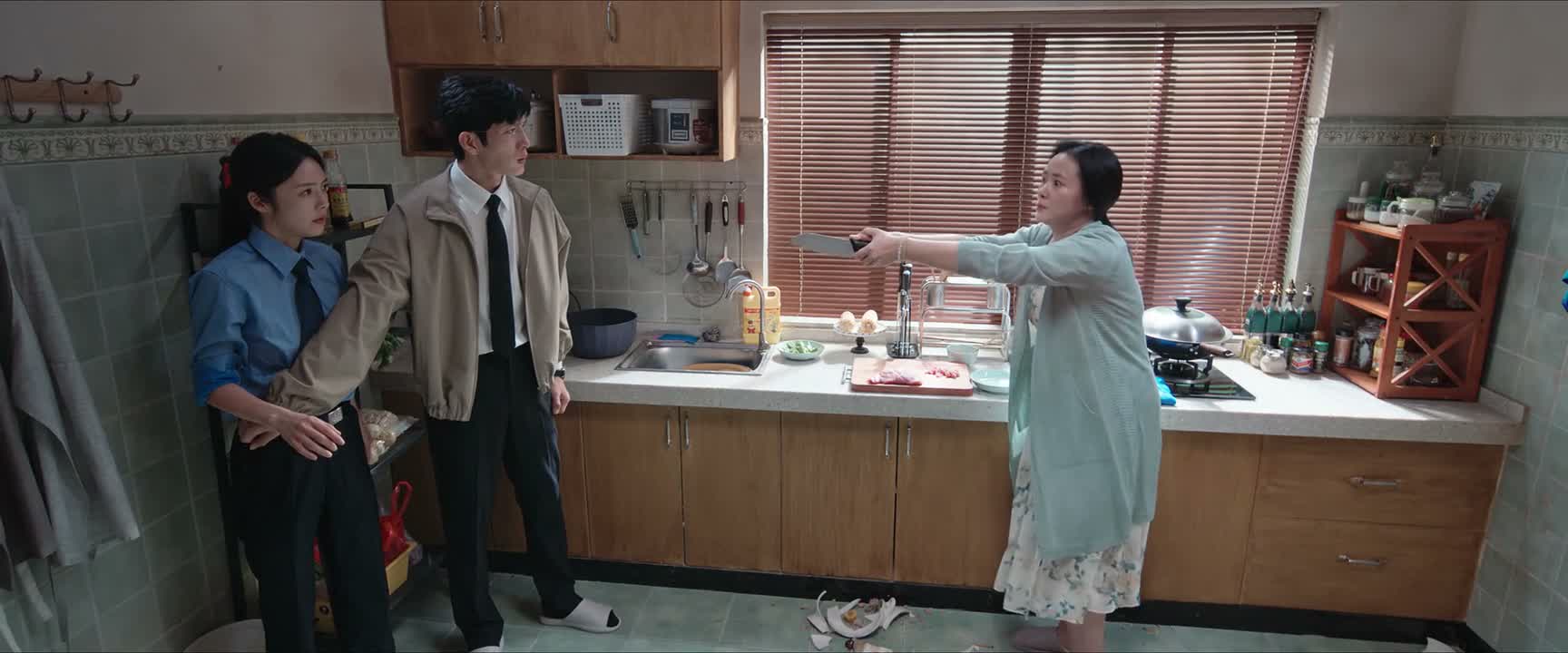
“that I will never go back with you.”

“Come on. I've told you clearly. Why are you still here?”

“- Come with me. - You shouldn't be here. Why?”