秦老师 你咋成我舅了
“Mr. Qin, how did you become my uncle?”
THE DIALOGUE REEL
都不太行
“But my wife said none are quite right.”
秦老师 你 咋成我舅了
“Mr. Qin, how did you become my uncle?”
因为没人能唱得好这个剧本啊 除非是你
“Because no one can sing this script well, except you.”
“What ridiculous angle are you playing at by claiming to be my uncle?”
Claiming sudden kinship (like being someone's uncle) in theatrical or interpersonal disputes is often used to bypass barriers, exercise authority, or justify helping/demanding things under customary family obligations.
LEARNING CHUNKS & PARTICLES
how did it become / how come (someone) ended up as
Colloquial blend of '咋' (how/why) and '成' (become), expressing surprise at an abrupt transformation or status change.
my maternal uncle
Spoken abbreviation of '我舅舅'; maternal uncles hold considerable prestige and affectionate influence in traditional Chinese kinship dynamics.
Indicates a newly emerged situation or sudden realization of a change of state.
VOCABULARY & EXPRESSIONS
Parallel Spoken Cinema Scenes (语义近邻切片)
“You're right.”

“What's that new script Mr. Qin wrote? Can you tell me about it?”

“Mr. Qin, how was that one?”

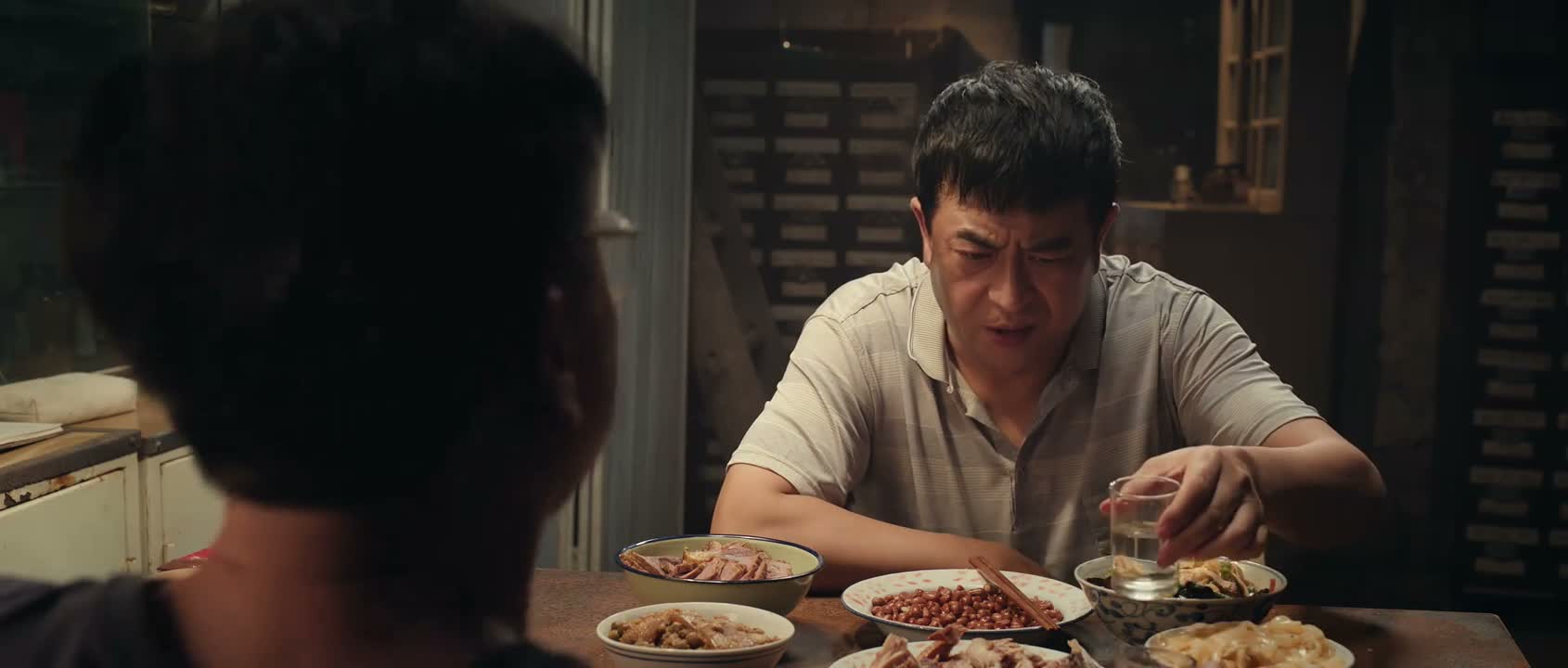
“Mr. Qin is upset. I'll have a drink with him. Keep an eye on the stall.”

“My dearest Mr. Qin, you can't do that... Shh.”

“Mr. Qin, don't let that acceptance speech go in vain.”