请问一下 这张照片是您拍的吗
“Excuse me, but did you take this photo?”
THE DIALOGUE REEL
我先弄一下灯 老板
“Let me just adjust the lights. Boss.”
请问一下 这张照片 是 您 拍的吗
“Excuse me, but did you take this photo?”
“I didn't take this. My dad took it.”
Direct spoken expression in this communicative setting.
Using '您' instead of '你' signals immediate respect and social distance when addressing shopkeepers, service workers, or elders in public spaces.
LEARNING CHUNKS & PARTICLES
excuse me, may I ask
A polite, standard conversational opener used to attract attention before asking a question.
is it that... / was it... that
The classic 'shi... de' construction used to emphasize details such as the agent, time, or manner of a completed action.
Turns a statement into a standard yes-no question.
VOCABULARY & EXPRESSIONS
Parallel Spoken Cinema Scenes (语义近邻切片)

“But who took this photo? I...”

“This photo. What's going on?”
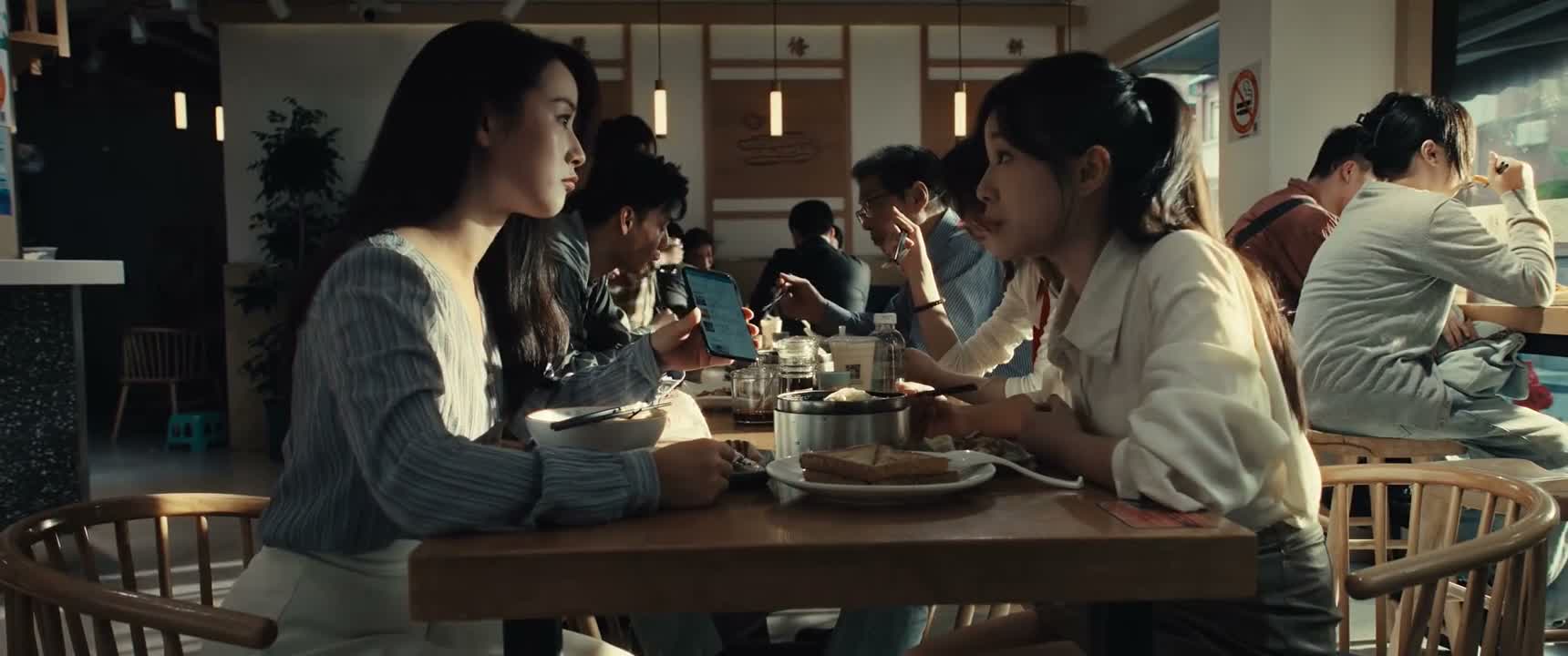
“Is there a photo? Let me check.”

“Is there anything wrong about this photo?”

“Then, can you explain what's going on with this photo?”

“Then, can you explain what's going on with this photo?”