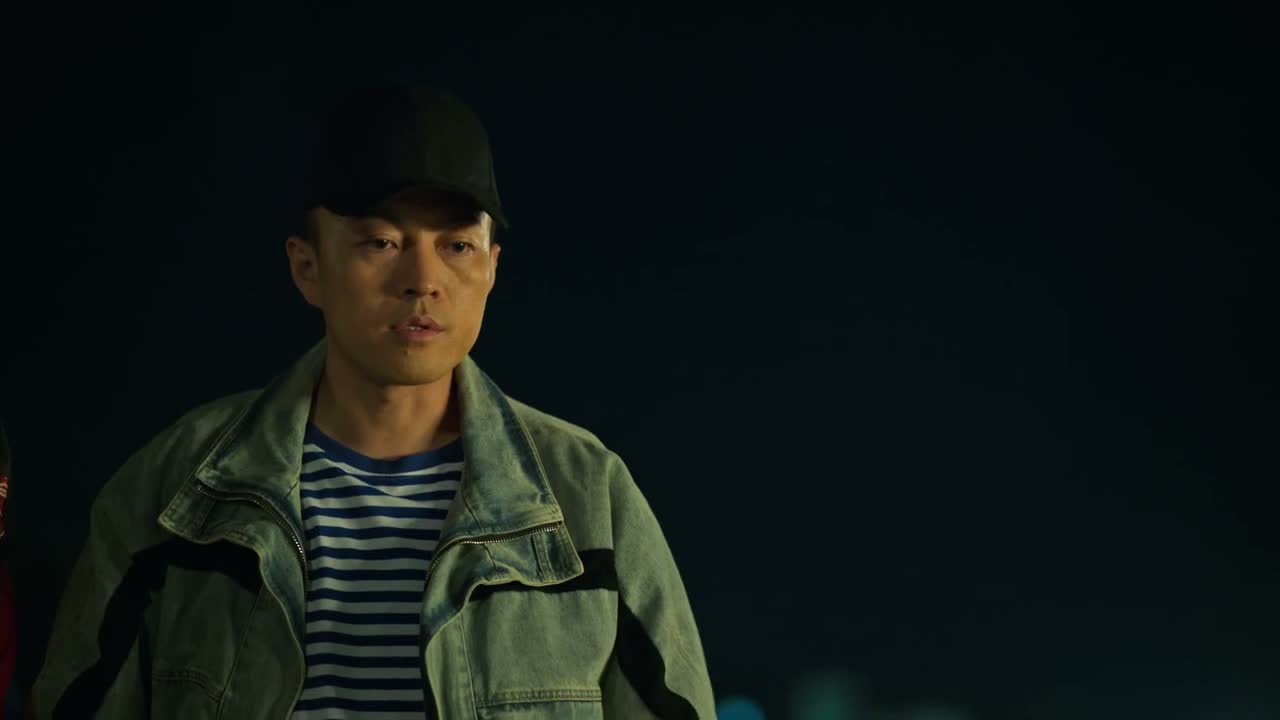
你觉得我们在这艘船上 还待得下去吗
“Do you think we can still stay on this ship?”
THE DIALOGUE REEL
什么 我 我们要走
“What? W-We are leaving?”
你觉得 我们 在这 艘船上 还 待得下去 吗
“Do you think we can still stay on this ship?”
不是
“Wait,”
“Wake up, we have to flee before things get worse.”
In Chinese conflict management, asking 'Do you really think...?' forcefully asserts harsh reality without directly issuing a blunt order.
LEARNING CHUNKS & PARTICLES
able to stay on / bear staying
A potential complement structure used to describe whether one can endure remaining in an uncomfortable environment.
do you really think...?
Frequently used rhetorically to expose flawed reasoning or urge the listener to face reality.
Forms a rhetorical question signaling that the obvious answer is negative.
VOCABULARY & EXPRESSIONS
Parallel Spoken Cinema Scenes (语义近邻切片)

“we are all in the same boat.”
“we are on the same boat.”

“We are in the same boat now.”

“If you go and cause trouble, will they let you stay on this ship?”