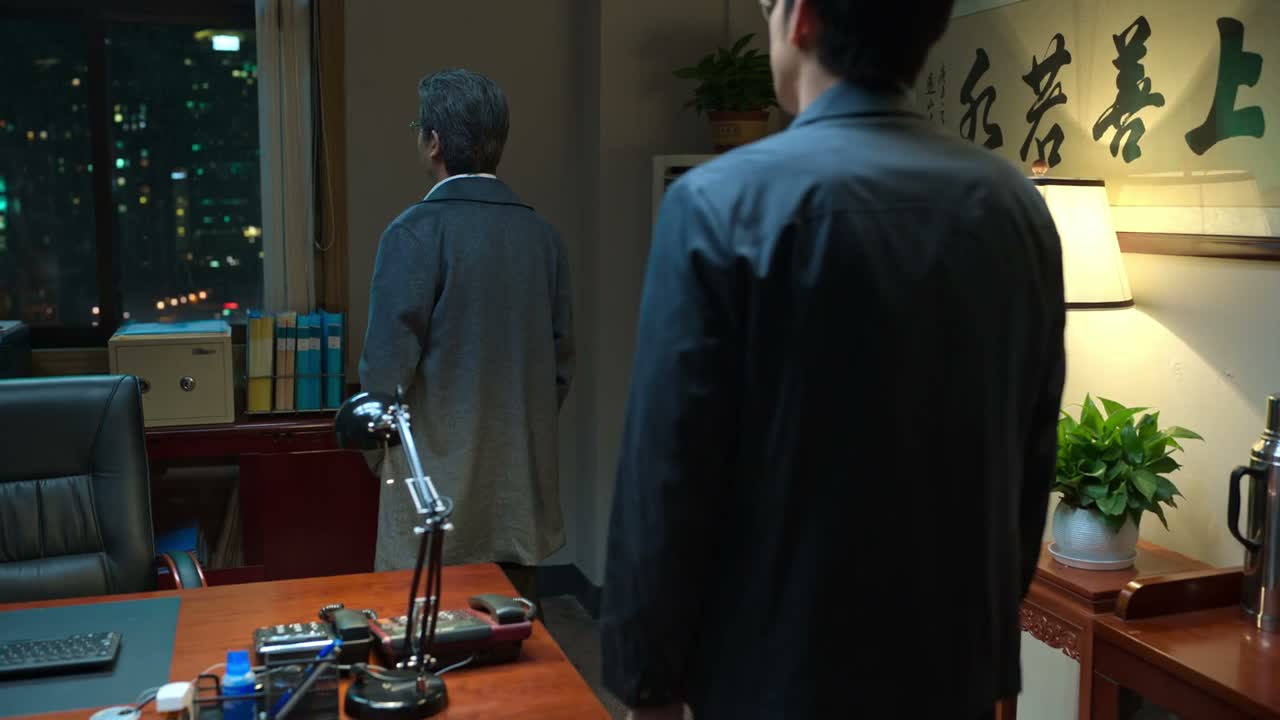
二十年前 这里什么样子 你知道吗
“Do you know what this place was like 20 years ago?”
THE DIALOGUE REEL
太狭隘了吧
“Isn't that too narrow-minded?”
二十年前 这里 什么样子 你知道吗
“Do you know what this place was like 20 years ago?”
比玛治县稍好些
“It was slightly better than Mazhi County.”
“You have no idea how hard it was in the past, so stop judging things so narrowly.”
Older or more veteran figures frequently invoke past hardships ('Twenty years ago...') to validate their perspective and discredit younger peers as overly idealistic.
LEARNING CHUNKS & PARTICLES
what it looks like; what kind of condition
Used in interrogative sentences to enquire about the physical state, appearance, or condition of a place or person.
do you know?
Frequently placed at the end of a rhetorical challenge to press the listener or emphasize their lack of knowledge.
Turns the statement into a direct rhetorical question, emphasizing the listener's presumed ignorance.
VOCABULARY & EXPRESSIONS
Parallel Spoken Cinema Scenes (语义近邻切片)

“That was years ago. I didn't mean anything by it.”
“It used to be shabby 20 years ago.”

“Who can prove that? (Printery) This used to be Yang Village.”

“It was over 10 years ago. How am I supposed to remember?”
“is no longer what it used to be.”

“Before? I've forgotten what I was like before.”