来吃碗面不行啊
“not to come to your restaurant to eat?”
THE DIALOGUE REEL
有手有脚的个大活人 人家到你店里
“acts of her own free will. Can I order her”
来吃碗面 不行啊
“not to come to your restaurant to eat?”
有本事你往外轰人啊 我 我不能轰人家
“You tell her to leave if you can. I can't tell her to leave.”
“They are paying customers coming to eat; we have no right to kick them out.”
In small Chinese eateries, turning away an ordinary customer who walks in to eat violates the fundamental hospitality ethic and business code.
LEARNING CHUNKS & PARTICLES
eat a bowl of noodles
A ubiquitous, casual phrase referring to grabbing a quick meal at a local noodle joint.
is that not allowed? / what's wrong with that?
Rhetorical tag used at the end of a sentence to challenge someone's objection or disapproval.
Elevates the rhetorical, challenging force of the question to stress obvious reasonableness.
VOCABULARY & EXPRESSIONS
Parallel Spoken Cinema Scenes (语义近邻切片)

“To just take the child here to have a bowl of noodles?”

“I should have eaten that bowl of noodles.”

“I think the noodles you cook cannot be eaten.”

“you can only have noodles soup. Every month? Yes.”
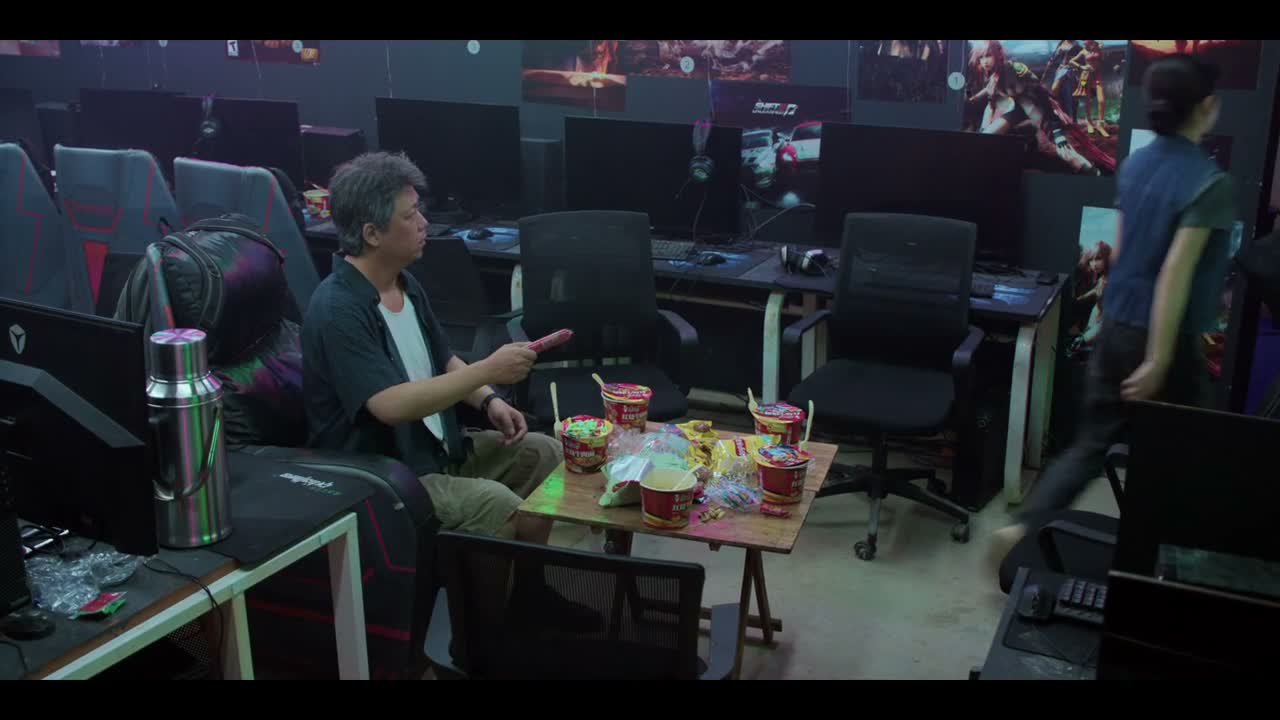
“You're not eating your instant noodles?”

“Anyway, stop eating instant noodles all the time, okay?”