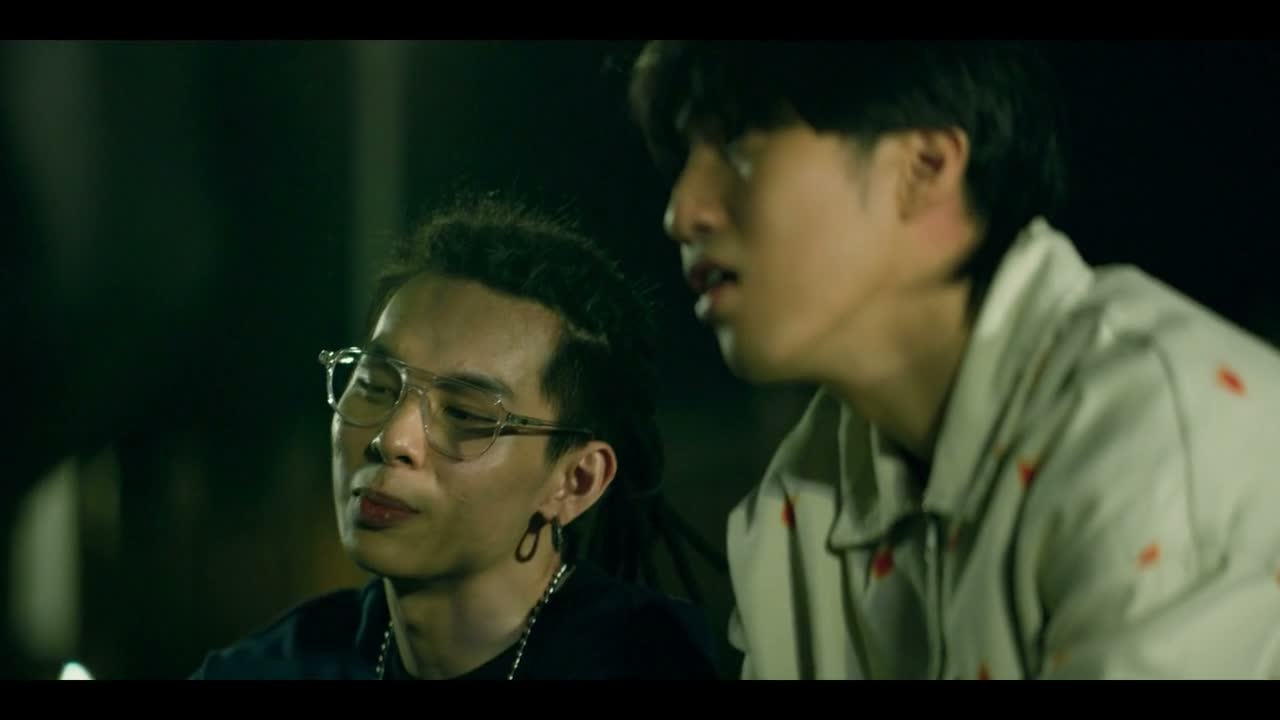
不 你这跟我有什么区别呢
“Wait, how is this any different from me?”
THE DIALOGUE REEL
那些照片
“and those photos.”
不 你这跟我 有什么区别 呢
“Wait, how is this any different from me?”
我发现在爱情里
“I've realized that in love,”
“You are doing the exact same thing, so stop judging me.”
Confronting moral equivalency is common in Chinese arguments, invoking the idea that neither side possesses the moral high ground.
LEARNING CHUNKS & PARTICLES
what is the difference (rhetorical: there is no difference)
Frequently used as a rhetorical rebuttal to accuse someone of double standards or splitting hairs.
Adds rhetorical weight and bounce to an argumentative challenge.
VOCABULARY & EXPRESSIONS
Parallel Spoken Cinema Scenes (语义近邻切片)

“What's the difference?”
“- That's basically what I said. - [friend] Oh, I… I added gestures.”

“There's no difference between us.”