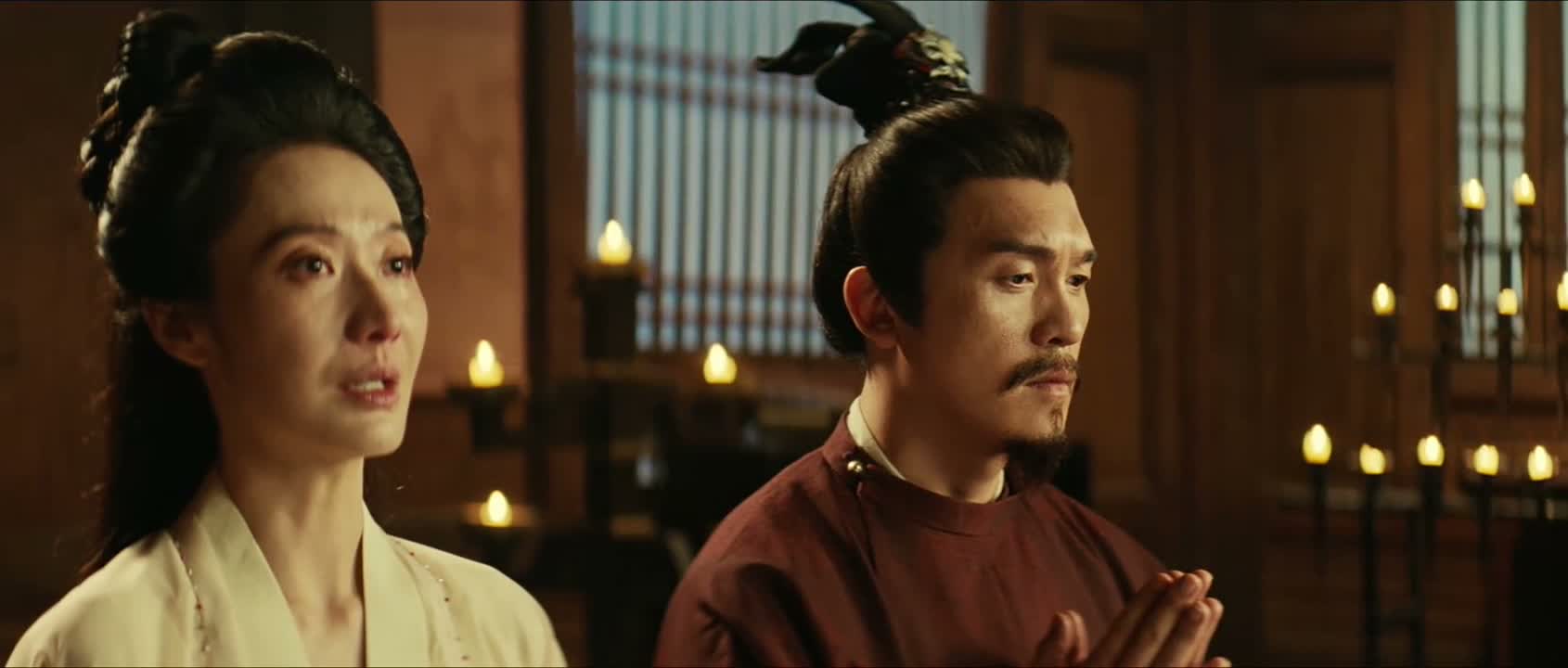
给妾身题一两字啊
“to write a few words for me?”
THE DIALOGUE REEL
既然有如此宝墨 贵妃娘娘 不如就用此墨
“What a miraculous inkstick. Your Highness, why not use this inkstick”
给妾身 题一两字 啊
“to write a few words for me?”
“Grant me the honor of your calligraphy to show everyone how much you cherish me.”
In imperial palace culture, receiving a personal inscription or calligraphy from the Emperor was not just an aesthetic gift but a major symbol of imperial favor and status among the concubines.
LEARNING CHUNKS & PARTICLES
I; your humble servant (self-deprecating pronoun used by women in ancient China)
Found exclusively in historical period dramas and classical literature when a wife or concubine addresses her husband or superior.
to write an inscription or dedication
A formal cultural collocation used when an esteemed person is requested to brush a poetic phrase or calligraphy onto a scroll, plaque, or fan.
Softens the imperative into an entreating, affectionate, and coquettish request.
VOCABULARY & EXPRESSIONS
Parallel Spoken Cinema Scenes (语义近邻切片)

“Why are you only thinking about being a concubine?”

“I spoke out of turn.”

“and you're lowering yourself to take me as a concubine,”

“This concubine lacks ability,”
“For your deep affection, I am eternally grateful.”

“Look at you. So what if you're Consort Wei?”