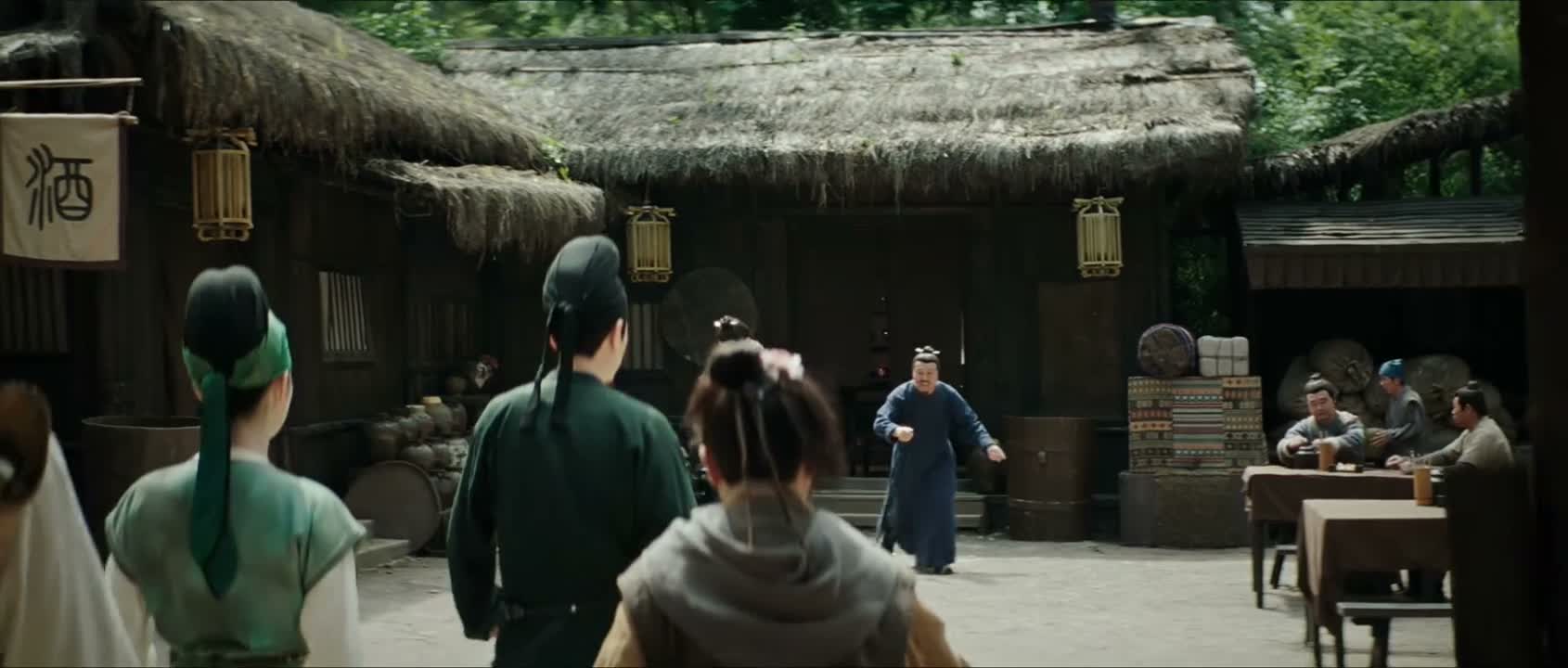
客官们要是去啊 最好早点动身
“If you're going there, you'd better leave soon,”
THE DIALOGUE REEL
“It's just that in recent months, Sanyuan Village hasn't been peaceful.”
客官 们 要是 去啊 最好早点动身
“If you're going there, you'd better leave soon,”
等天黑了就太危险了 店家 这三元村怎么个不太平
“it gets too dangerous after dark. Innkeeper, what happened in the Sanyuan Village?”
Direct spoken expression in this communicative setting.
In ancient Chinese travel culture, innkeepers commonly warned patrons about local bandits, wild beasts, or supernatural perils along mountain roads.
LEARNING CHUNKS & PARTICLES
if / in case
A very common colloquial conjunction used to introduce a condition in everyday speech.
had better / best to
Used to make a polite or practical suggestion without sounding overly commanding.
to set out / to depart
A classic verb for leaving on a journey or beginning a trip.
Pauses gently on the conditional clause to catch the listener's attention before offering advice.
VOCABULARY & EXPRESSIONS
Parallel Spoken Cinema Scenes (语义近邻切片)

“Sir, it's me.”

“Sirs, are you here for a stay?”

“Sir, you must be joking.”

“Sorry, sir. We're closed today.”

“Sir, what would you like to drink? What do you recommend?”
“Welcome.”