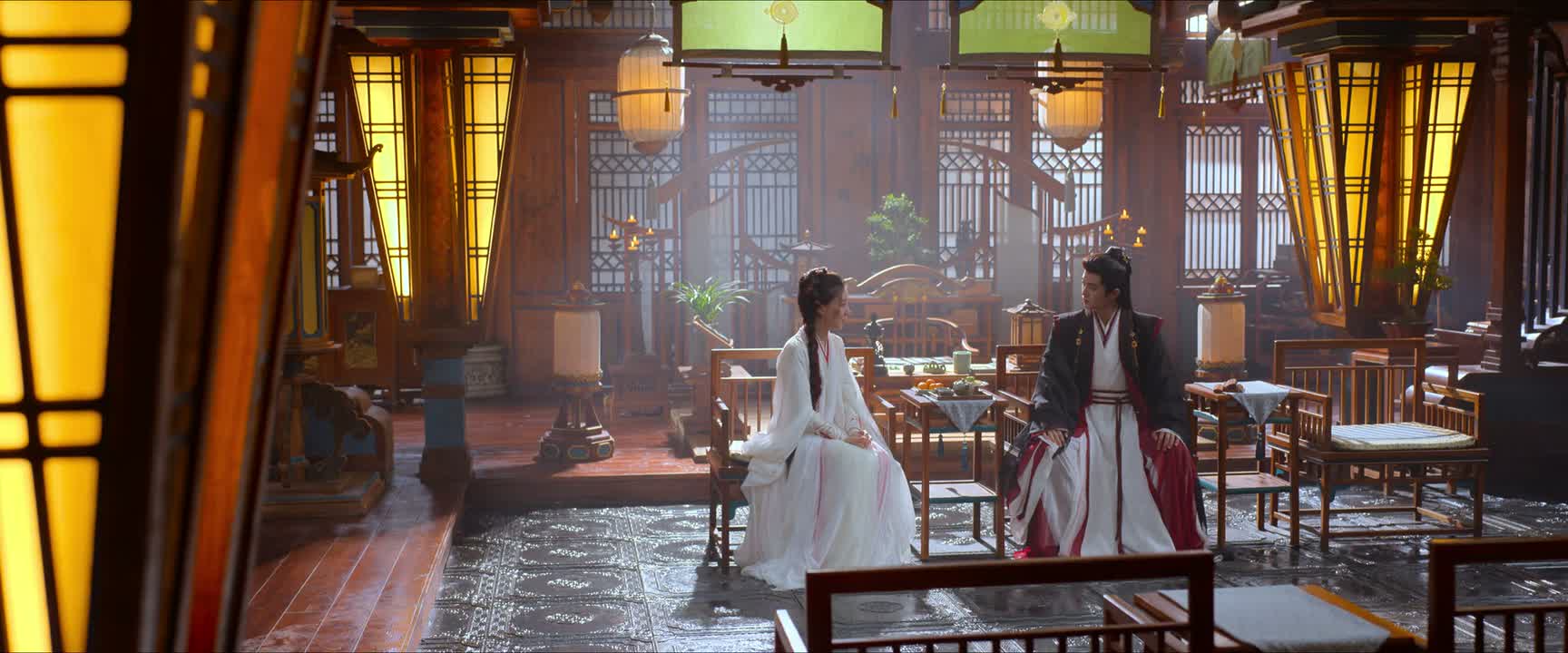
这位是我内弟 白非珏 多谢师兄
“This is my brother-in-law, Bai Feijue. Thank you, Senior Brother.”
THE DIALOGUE REEL
“Junior Brother. Little Junior Sister. Greetings, Senior Brother.”
这位 是我 内弟 白非珏 多谢 师兄
“This is my brother-in-law, Bai Feijue. Thank you, Senior Brother.”
见过白公子
“Nice to meet you, Mr. Bai.”
Direct spoken expression in this communicative setting.
In traditional Chinese culture and martial arts fraternities, clearly defining familial and sect hierarchies is essential for maintaining social decorum and showing mutual respect.
LEARNING CHUNKS & PARTICLES
wife's younger brother; brother-in-law
A formal kinship term used in traditional or historical contexts to refer to one's wife's younger brother.
many thanks; thank you very much
A respectful, slightly formal way to express gratitude, common in polite social encounters.
VOCABULARY & EXPRESSIONS
Parallel Spoken Cinema Scenes (语义近邻切片)
“Senior Bai and I were in the same sect—”

“you truly are the direct disciple of my senior.”

“If you still have doubts, why don't you come”

“Because you are my senior from the same department.”

“He was my most trusted senior.”

“Hey, think about it. Why does Xu care so much about her?”