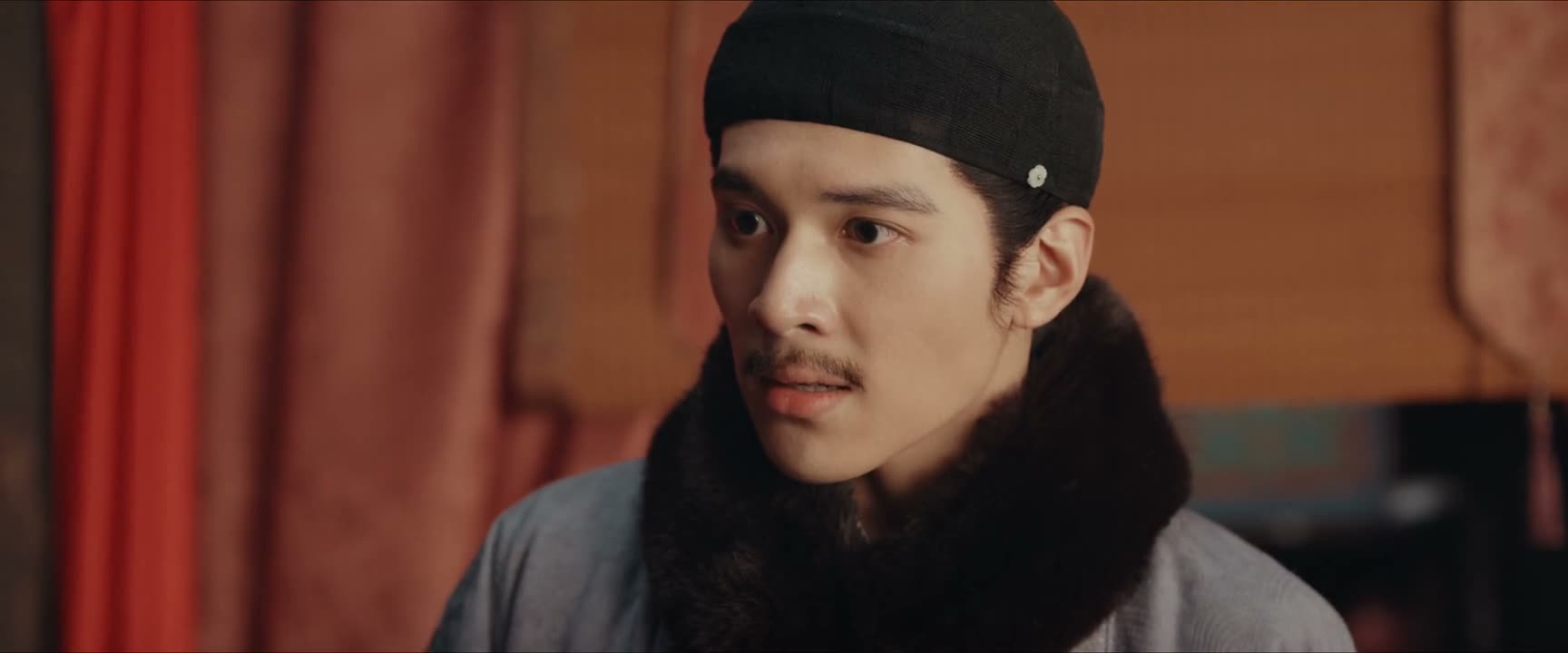
到现在他们还在地狱为我受尽折磨
“To this day, they're in hell, suffering because of what I did.”
THE DIALOGUE REEL
我爸、我妈都没能 从那场火中活着出来
“[Han Chieh] In the end, my mother and father died in that fire. [crying]”
到现在 他们 还在 地狱为我 受尽折磨
“To this day, they're in hell, suffering because of what I did.”
太子爷要我杀恶鬼
“I kill evil spirits.”
Direct spoken expression in this communicative setting.
Chinese cultural notions of filial piety include the terrifying weight that one's parents might suffer in the underworld (Di Yu) on one's behalf, fueling powerful duties of vengeance or spiritual salvation.
LEARNING CHUNKS & PARTICLES
to endure all kinds of torment; to suffer endlessly
A vivid four-character collocation used to describe prolonged physical or psychological suffering.
up until now; to this day
Emphasizes the ongoing nature of an unresolved past tragedy or burden.
VOCABULARY & EXPRESSIONS
Parallel Spoken Cinema Scenes (语义近邻切片)

“behind bars, you're still talking tough.”

“But today, you endured 18 lashes. Like a different person.”
“Even if he is a prisoner now,”