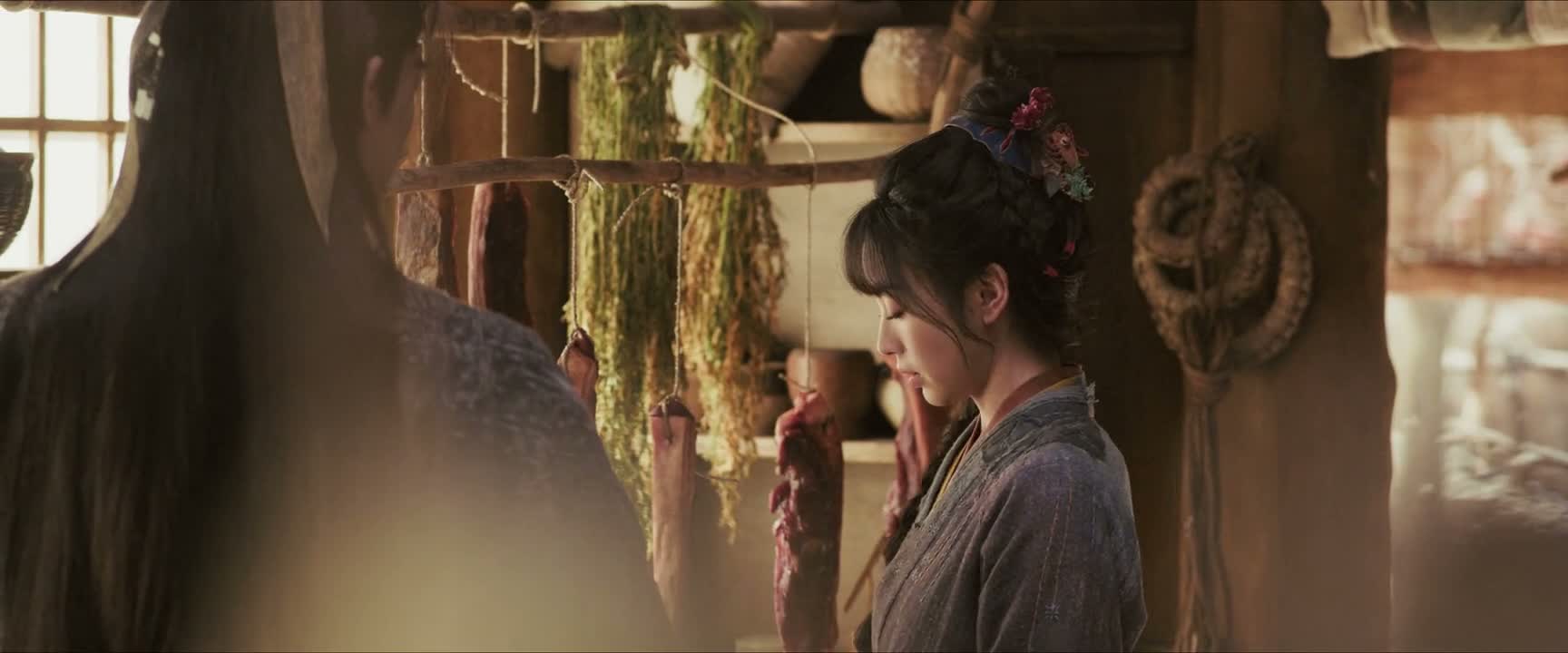
我大娘烤的栗子可香了
“My auntie roasts delicious chestnuts.”
THE DIALOGUE REEL
不必了
“No need.”
我大娘烤的栗子可香了
“My auntie roasts delicious chestnuts.”
就是 可香了
“Yes, they taste great.”
“Don't be shy or refuse—you really must taste these delicious chestnuts!”
In Chinese culture, guests often politely decline an initial food offer (keqi), requiring the host to insist warmly and praise the food's quality to make the guest comfortable accepting.
LEARNING CHUNKS & PARTICLES
smells/tastes so delicious
Colloquial structure '可...了' used emphatically to describe irresistible food aroma.
aunt; elder aunt
Kinship or polite social title for an older woman, particularly in northern or rural spoken Chinese.
Acts with '可' to convey an emphatic, convincing exclamation about the quality of the food.
Parallel Spoken Cinema Scenes (语义近邻切片)

“Here are some freshly roasted chestnuts.”

“freshly roasted chestnuts.”

“I never prepared any chestnut cake for you.”

“have your favorite chestnut cake. It may comfort you.”

“Changning, we have roasted chestnuts.”
“Mr. Zhao and Mrs. Zhao are really nice people.”