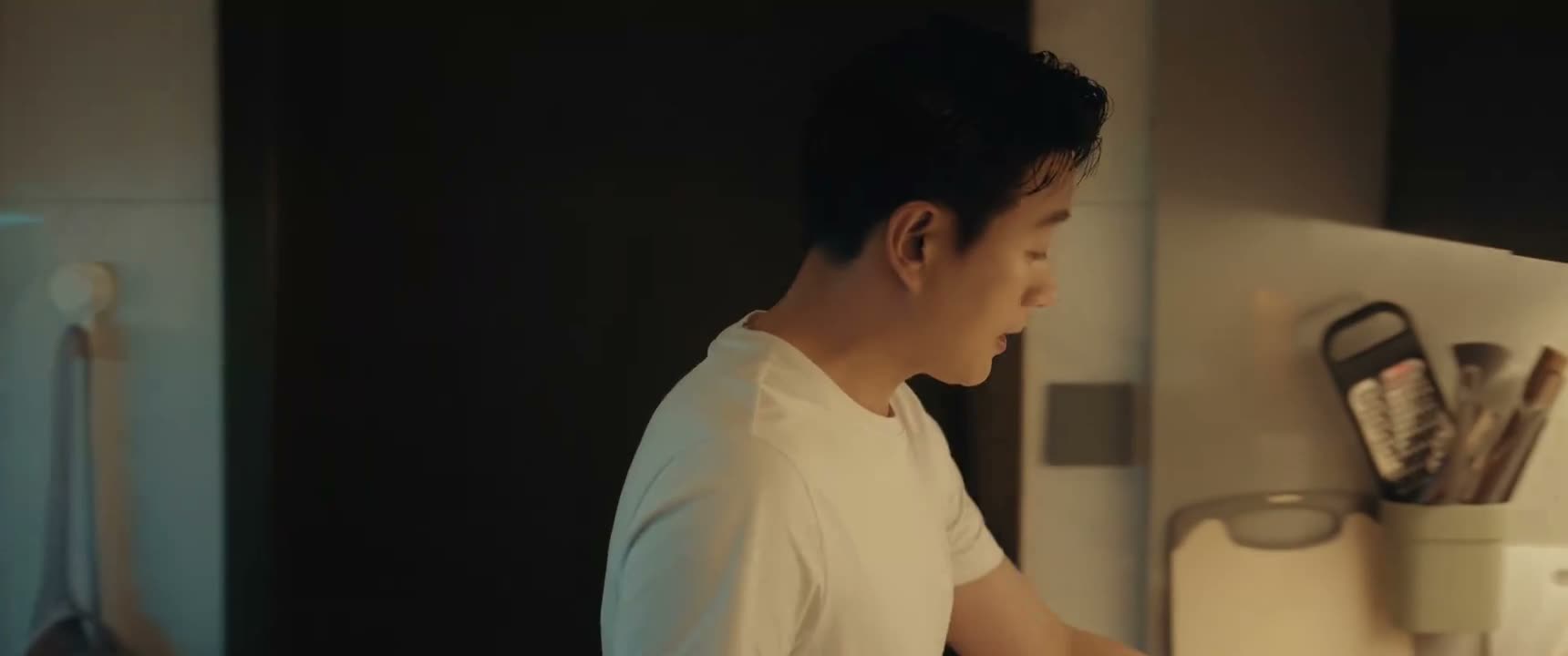
那她为什么要删掉部分 不删掉全部呢
“Why didn't she just delete everything?”
THE DIALOGUE REEL
“But Lin Wanxing could have deleted some messages.”
那她 为什么要 删掉部分 不删掉全部 呢
“Why didn't she just delete everything?”
“So the more likely scenario is that Spade Q is just an account,”
“If she wanted to hide her tracks, deleting only part makes zero sense.”
Using parallel contrasts like '部分' versus '全部' in a rhetorical question is a common discursive strategy in Chinese to highlight an unresolved contradiction.
LEARNING CHUNKS & PARTICLES
why would [one] / why want to
Standard pattern for questioning someone's motive or intention.
to delete / to erase
A resultative complement structure commonly used for digital files or text.
Softens the interrogative question and marks active reflection or contemplation.
VOCABULARY & EXPRESSIONS
Parallel Spoken Cinema Scenes (语义近邻切片)

“Delete that photo first. Delete it. Why should I delete it? Give it to me.”

“At a time like this, would firing her for no reason be appropriate?”

“It must be returned. Right. If Ms. Chang backs out, we'll find other solutions.”

“If you cut so many sung lines,”

“She'll likely be laid off soon. Why?”
“She'll probably be laid off. Why?”