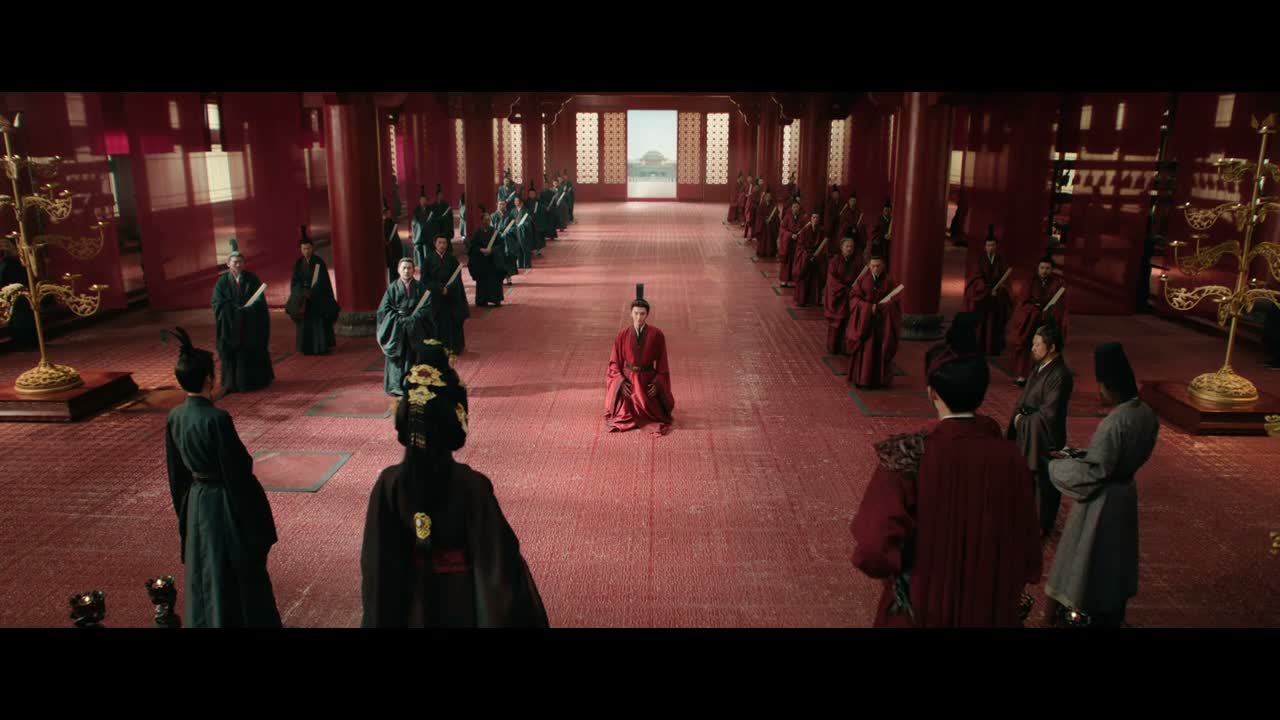
我比先帝如何
“how do I compare to the late emperor?”
THE DIALOGUE REEL
如此功业
“With such accomplishments,”
我 比先帝如何
“how do I compare to the late emperor?”
你说
“You tell me.”
“Admit that my achievements have already surpassed the late Emperor, and let me see your loyalty.”
An honorific title used by ancient monarchs or court officials to refer to a deceased predecessor. In traditional political ethics, successor rulers were often constrained by ancestral precedents and the achievements of previous emperors; directly comparing oneself to the late emperor conveyed strong political ambition and carried immense sensitivity.
LEARNING CHUNKS & PARTICLES
How does A compare to B?
A comparative structure with a strong literary and classical flavor, frequently used in ancient monarch-minister dialogues or formal, solemn settings to evaluate superiority or inferiority.
VOCABULARY & EXPRESSIONS
Parallel Spoken Cinema Scenes (语义近邻切片)

“would you dare treat him this way, Prime Minister?”
“And how can we face the late Emperor?”

“I have the late Emperor's edict.”

“the late Emperor abdicated to you,”

“want to be outshone by the previous Empress Dowager?”

“I'll finish you on behalf of the late Emperor!”