那万一你上楼崴脚了咋办
“What if you twist your ankle on the stairs?”
THE DIALOGUE REEL
“We're almost there. Let me walk you home.”
那 万一 你 上楼 崴脚了 咋办
“What if you twist your ankle on the stairs?”
“That's less terrifying than my mom's beating.”
“What if you twist your ankle going upstairs? (Just let me walk you all the way up.)”
A traditional Chinese interpersonal norm advocating that when helping someone, one should see it through completely. In the context of avoiding being caught by parents, it reflects the playful, conspiratorial dynamic of young people covering for each other.
LEARNING CHUNKS & PARTICLES
what should be done if an unexpected situation occurs
A highly frequent colloquial pattern. 'Za ban' is equivalent to 'zenme ban' (what to do), commonly used to raise potential worries or unforeseen circumstances.
to sprain one's ankle
Originally a Northern colloquial term now widely used across China, commonly paired with 'le' (e.g., 'wai jiao le').
Used as a sentence-initial conjunction and discourse marker to pick up on the previous context and introduce a hypothetical scenario.
VOCABULARY & EXPRESSIONS
Parallel Spoken Cinema Scenes (语义近邻切片)

“I thought it was just a sprain.”
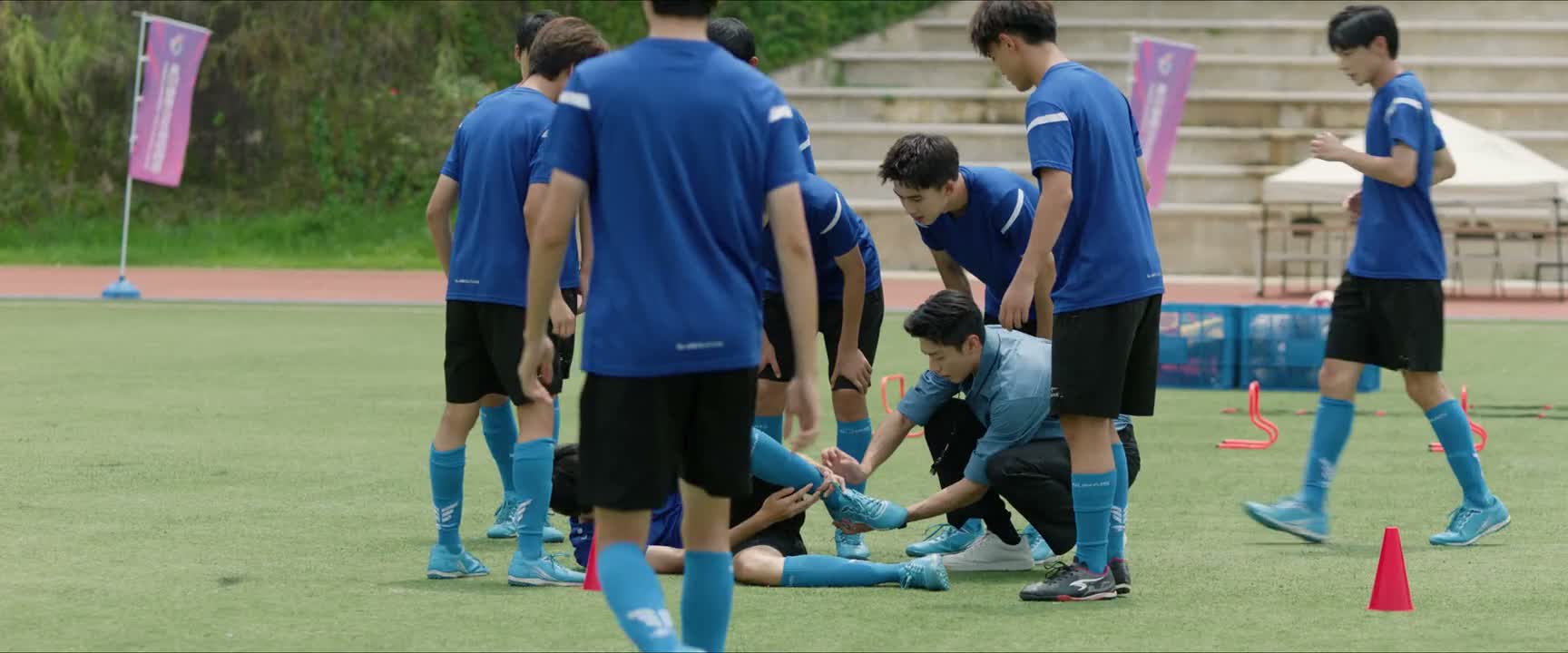
“Come on. Did you sprain it? I'm fine. A little bit.”

“I just fell on the stairs.”

“I sprained my ankle. Can you help me up?”

“That's less terrifying than my mom's beating.”

“I just took a fall.”