他听他姐的 你们都回去吧 谢谢你们了
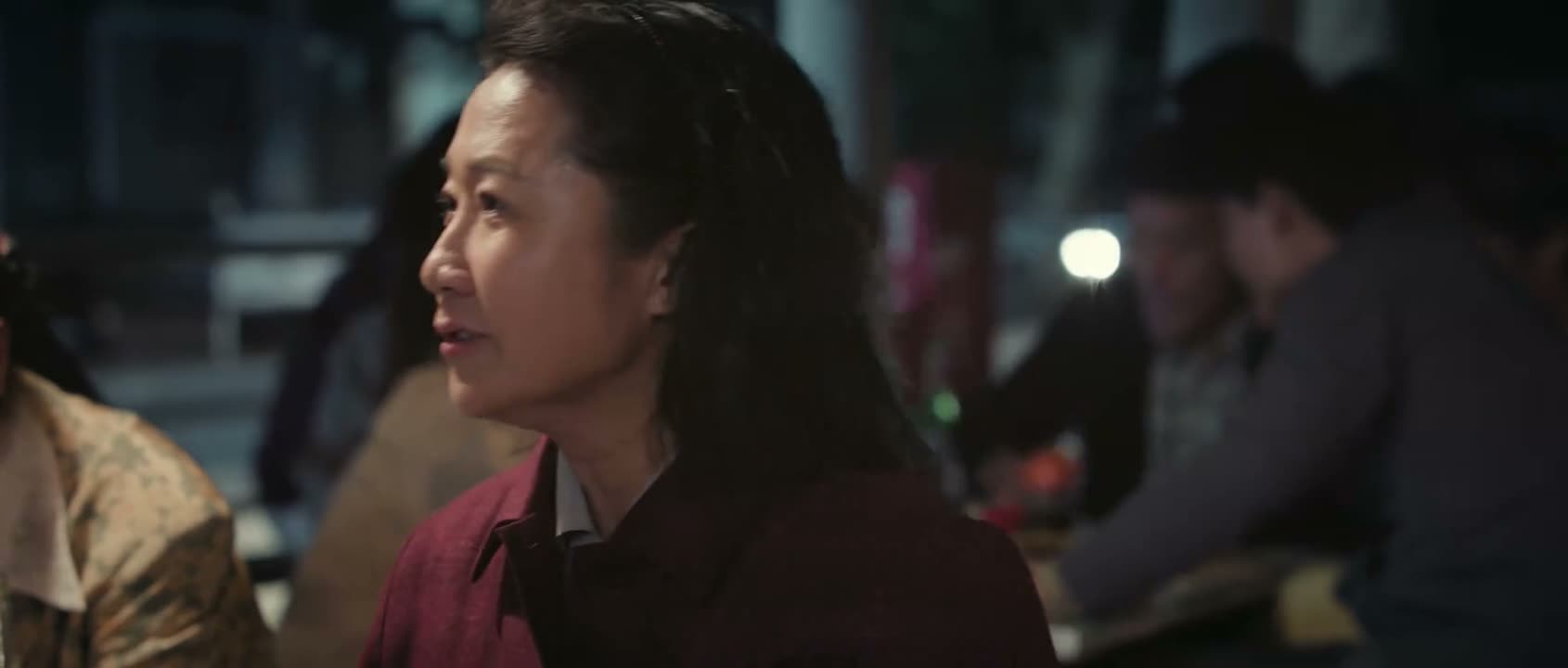
“He listens to his sister. Go back. Thank you for caring about Xiaofei.”
THE DIALOGUE REEL
千万别报警
“Please don't.”
他 听他姐的 你们 都回去吧 谢谢你们 了
“He listens to his sister. Go back. Thank you for caring about Xiaofei.”
你们关心小飞 谢谢你们了 你别进来 小名
“Thank you for caring about Xiaofei. - Don't come in. - Xiaoming.”
“His sister can handle him. Please, you all should just leave and don't make things worse—thank you.”
In Chinese family culture, an elder sister often holds authority and soothing influence. When internal family crises or conflicts arise, families typically prefer not to air dirty laundry in public ('jia chou bu wai yang') and resolve matters internally among relatives, avoiding outside or police intervention.
LEARNING CHUNKS & PARTICLES
to listen to someone; to follow someone's decision
A common colloquial sentence pattern used to indicate deference to an authority figure or someone trusted, such as 'wo ting ni de' (I'll listen to you) or 'ta ting yi sheng de' (he follows the doctor's advice).
thank you all; thank you guys
Adding the modal particle 'le' at the end often implies that the matter has wrapped up, reassuring others or politely wrapping up the interaction and seeing guests off.
Used at the end of an imperative sentence to soften an otherwise blunt dismissal or request to leave, conveying a sense of suggestion, persuasion, or gentle consultation.
Used at the end of an expression of gratitude to reinforce sincerity and a sense of closure, subtly signaling the end of the interaction.
VOCABULARY & EXPRESSIONS
Parallel Spoken Cinema Scenes (语义近邻切片)

“I'll leave that up to Yu. I'll follow her lead.”

“With my sister's sarcasm, he definitely won't get lost easily.”

“Listen, as your older sister,”
“Listen, your sis speaks so well”

“If your sister hadn't found out in time, just imagine the consequences.”

“Why didn't you tell me you were visiting your sister?”