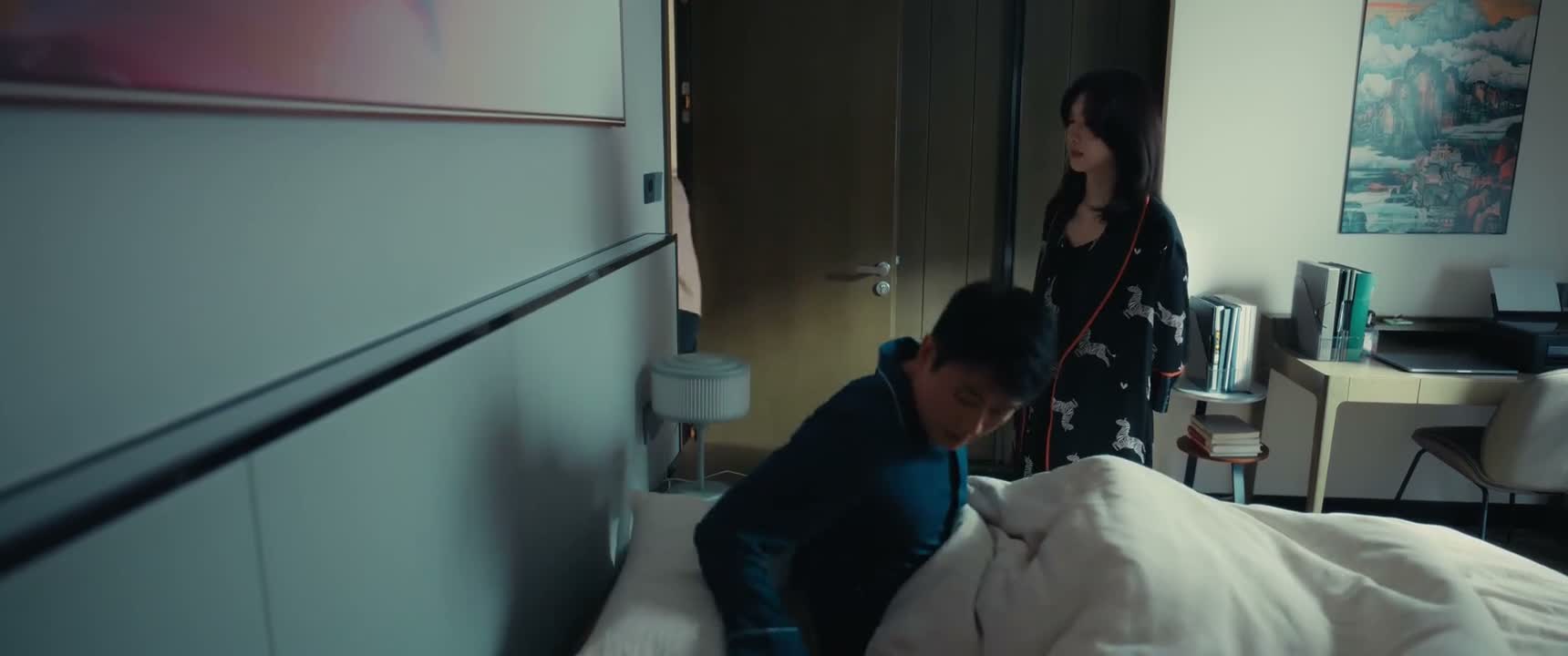
这大清早的你妈能起来
“Would she even be up this early?”
THE DIALOGUE REEL
“That's less terrifying than my mom's beating.”
这 大清早的 你妈能 起来
“Would she even be up this early?”
“True, they went to the carnival yesterday.”
“It's way too early, there's no way your mom is awake yet—stop worrying.”
Spoken Chinese frequently uses rhetorical questions (such as 'ta neng lai?' [could she really come?] or 'ni ma neng qi lai?' [could your mother possibly get up?]) to convey a strong negative inference, demonstrating an indirect communicative strategy.
LEARNING CHUNKS & PARTICLES
this early in the morning; at such an early hour
A common spoken time adverbial placed at the start of a sentence, carrying a slight emphasis or exclamation that it is too early.
how could she possibly get up? (rhetorical question implying negation)
Uses a rhetorical question to convey strong negation, often used to dismiss another person's unnecessary worries.