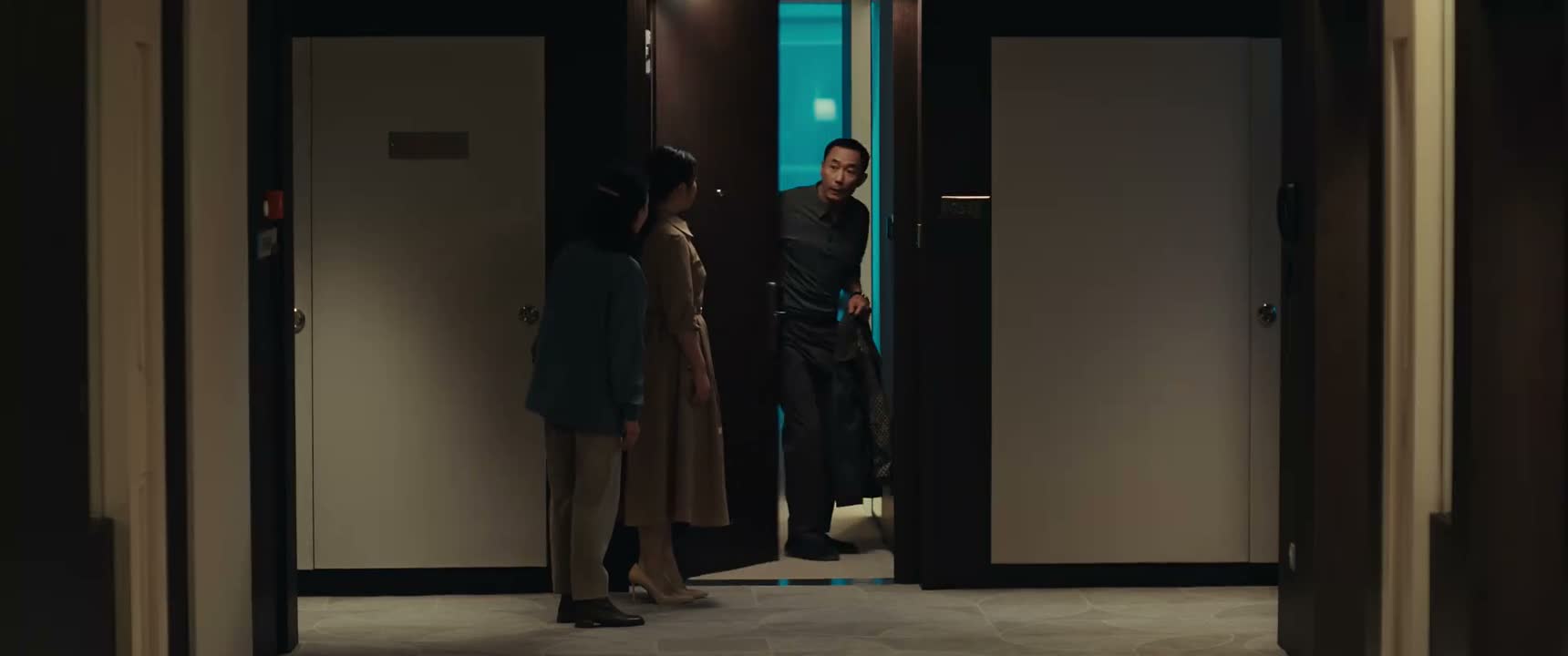
干吗呀 走了 走了
“What are you doing? Let's go.”
THE DIALOGUE REEL
起来你别拿了 没事 没事
“- Leave it. - It's fine.”
干吗呀 走了 走了
“What are you doing? Let's go.”
走了 走了
“Let's go.”
Direct spoken expression in this communicative setting.
In Chinese departures, routine disputes often occur over who carries luggage or gives gifts, prompting companions to urge a swift exit to avoid excessive fuss.
LEARNING CHUNKS & PARTICLES
What are you doing? / Why bother?
A highly colloquial, soft rhetorical question used among close friends or family to question unnecessary fussing.
Let's go / Time to leave
Repeated to create momentum and signal an immediate departure in everyday spoken Chinese.
Softens the bluntness of the question '干吗', making it sound familiar rather than genuinely hostile.
Indicates a transition into action or departure, signaling that it is time to get moving.
VOCABULARY & EXPRESSIONS
Parallel Spoken Cinema Scenes (语义近邻切片)

“What are you doing? Hurry up.”

“-What do you think you're doing? -Alright, alright. Anything you want to say? -Let's go. -Yeah, let's go.”
“- What is it? - Let's go. Hurry up. - Time for breakfast. - Already?”

“What are you up to? You're wide awake now. (Dad: Your mom finally gave in.) Come on. (Go get her, son.) Coming.”