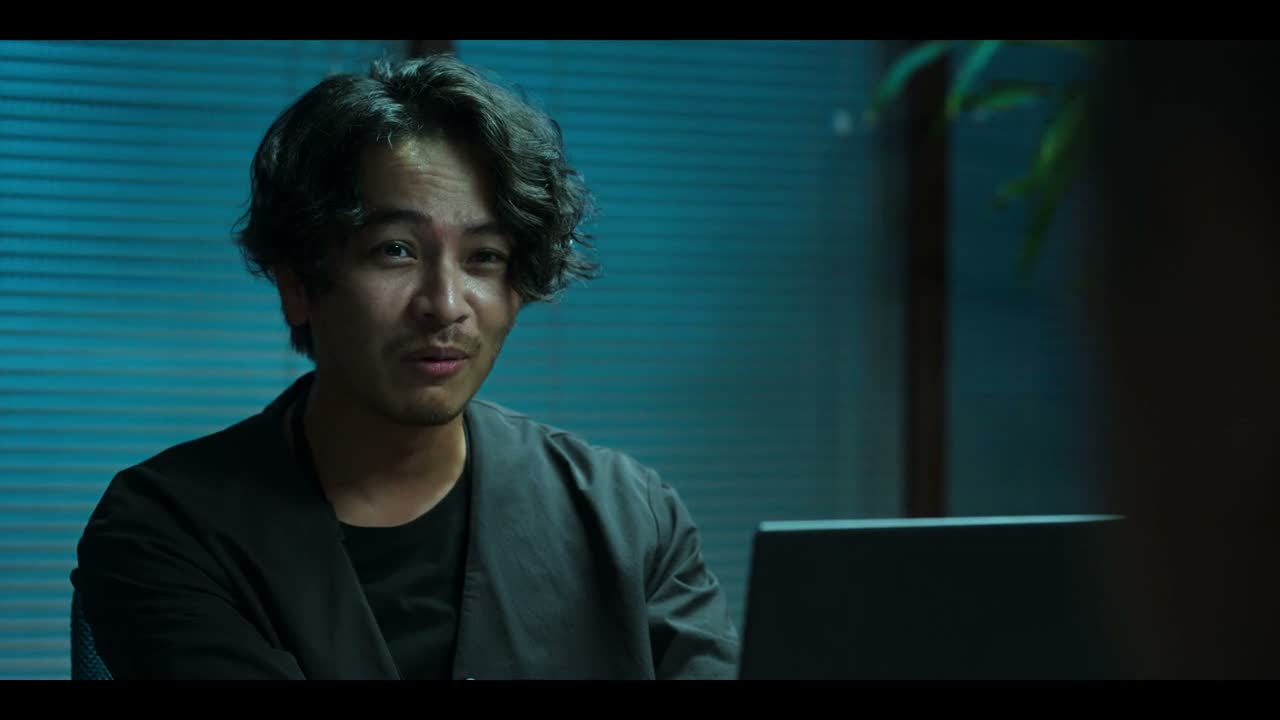
宋老板 莫打了 宋老板 莫打了
“- How dare you! - Mr. Song, spare me. Mr. Song, spare me.”
THE DIALOGUE REEL
好像还是因为那个公文包
“I think it was still because of that briefcase.”
宋 老板 莫打了 宋 老板 莫打了
“- How dare you! - Mr. Song, spare me. Mr. Song, spare me.”
还嘴硬 是吧?还嘴硬 莫打了
“Shut up. - Still won't admit it? - I am sorry. Spare me.”
Direct spoken expression in this communicative setting.
In Southwestern Mandarin and southern dialects, '莫' (mò) commonly replaces standard '别' (bié) as a negative imperative meaning 'do not'.
LEARNING CHUNKS & PARTICLES
stop hitting; don't fight anymore
A regional or colloquial imperative equivalent to '别打了', used to beg someone to stop physical violence.
boss; proprietor
A ubiquitous polite or respectful form of address for business owners or persons of authority.
Indicates a change of state, functioning here as an imperative marker to cease an ongoing action.
VOCABULARY & EXPRESSIONS
Parallel Spoken Cinema Scenes (语义近邻切片)

“How could Mr. Song possibly do such a thing? Right, I almost forgot.”

“You said your brother-in-law, Mr. Song, has treated you well,”

“Mr. Sun, no need to worry.”

“Ms. Zhao, sorry to bother you.”

“There is only one Mr. Song in Weiyang.”
“was just won by Heilung Hall moments before this massacre. Isn't that odd?”