我就留了个心眼 我去问了一下负责方穆扬的护士
“So, I investigated further. I talked to Fang Muyang's nurse”
THE DIALOGUE REEL
可梁大夫却跟我说 他也不知道方穆扬康复的事
“But Dr. Liang told me that he's not aware of Fang Muyang's recovery.”
我就 留了个心眼 我去 问了一下 负责 方穆扬的护士
“So, I investigated further. I talked to Fang Muyang's nurse”
还有周围病房的病友
“and other patients who talked to him.”
“I smelled something fishy, so I took matters into my own hands to find out the truth.”
In Chinese social interaction, 'keeping an eye out' reflects practical wisdom in navigating ambiguity or potential deceit without openly causing a confrontation.
LEARNING CHUNKS & PARTICLES
to stay alert; to keep one's eyes open; to be on guard
A very common spoken idiom used when taking precautionary steps due to mild distrust or caution.
to be responsible for; to take charge of
Can be used as a verb or an adjective to indicate professional responsibility.
Marks completed aspect after the verb phrase '留个心眼'.
VOCABULARY & EXPRESSIONS
Parallel Spoken Cinema Scenes (语义近邻切片)

“And the innocent ones? We won't keep them a second longer.”

“I'll keep an eye out for you as well.”

“I saved this especially for you. I was going to give it to you”

“There's not much point in you staying by my side to protect me.”
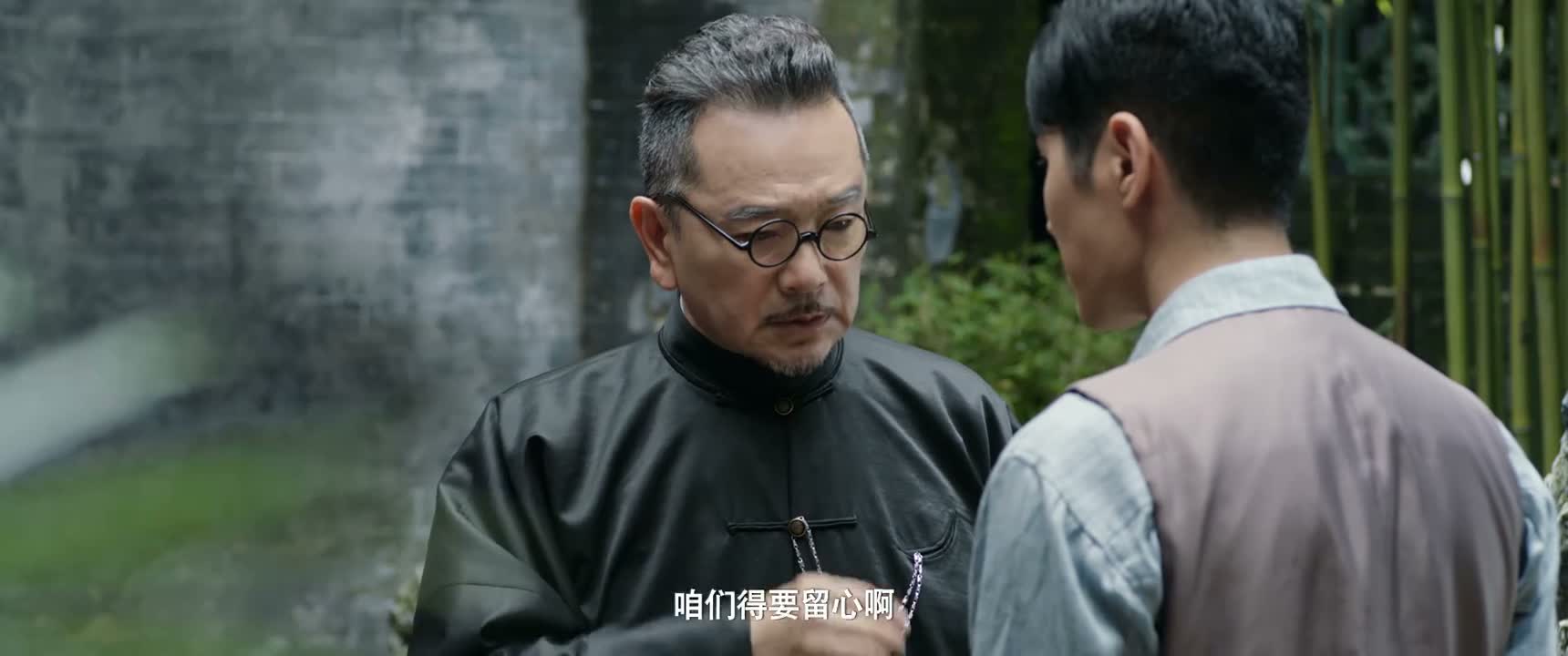
“...we must be careful”

“or even waver and secretly collude”