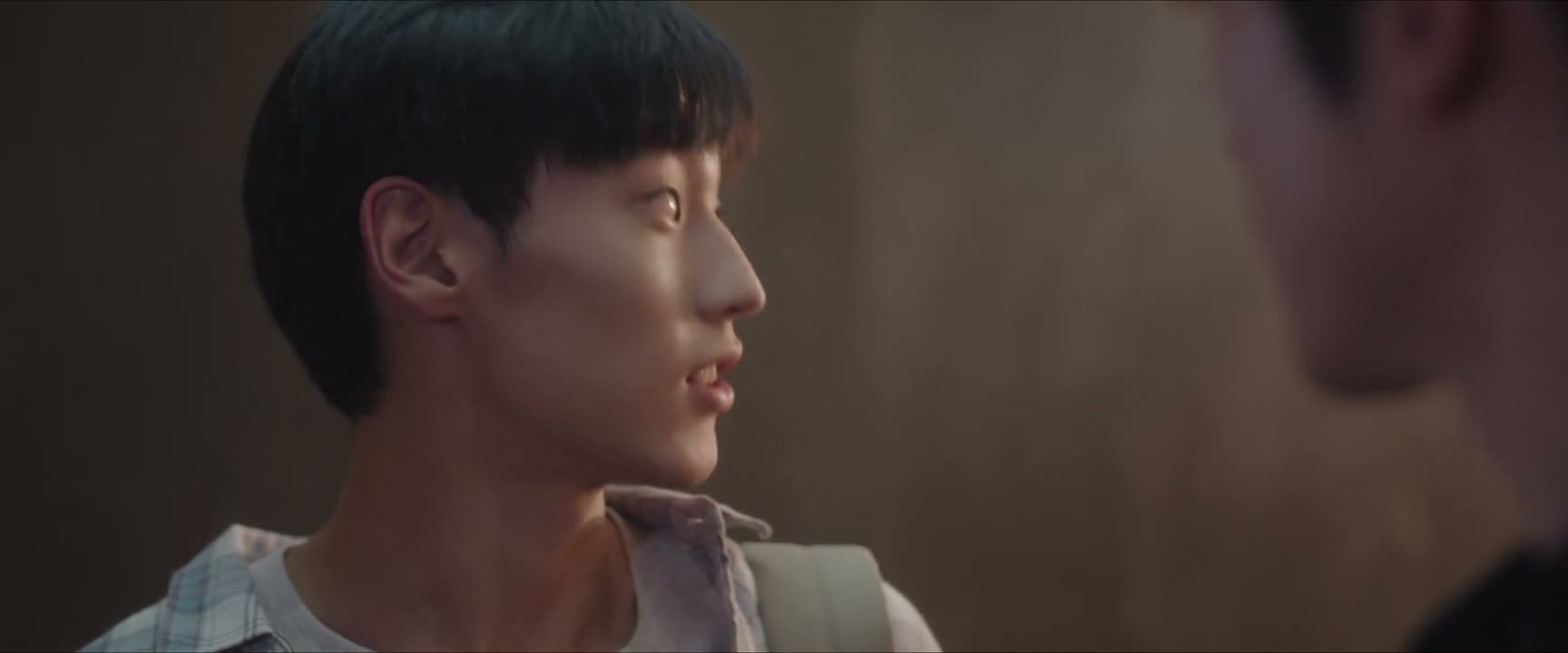
有的人选择了在前门走出去
“Some choose to walk out through the front door,”
THE DIALOGUE REEL
“Everyone might have grown up in a small dark room.”
有的 人选 择了 在前门走出去
“Some choose to walk out through the front door,”
“Some individuals manage to confront their dark past and walk out into the open proudly.”
In contemporary Chinese discourse, 'walking out' (走出来/走出去) is a standard psychological metaphor for resilience and overcoming deep emotional wounds.
LEARNING CHUNKS & PARTICLES
to walk out, to step out (physically or mentally overcome a predicament)
Widely used both literally for leaving a room and metaphorically for emerging from depression, trauma, or difficulty.
at/through the front door
Used metaphorically to imply openness, pride, and uprightness, opposite to sneaking around.
VOCABULARY & EXPRESSIONS
Parallel Spoken Cinema Scenes (语义近邻切片)

“and others through the back.”

“Block all the doors. Don't let anyone escape. Move!”

“Let's go to the city gate.”

“But the accusation of pulling strings has to be cleared.”

“If we leave now, we can still get back before the city gates close.”
“You actually could have just pushed the front door open and come in.”