灿灿 阿姨可想你了
“Can, I miss you so much.”
THE DIALOGUE REEL
北北 开门啊
“Bei, open the door.”
灿灿 阿姨可 想你了
“Can, I miss you so much.”
Direct spoken expression in this communicative setting.
In Chinese culture, adult female friends and acquaintances are respectfully and affectionately addressed as 'Ayi' (Auntie) by children to establish familial warmth.
LEARNING CHUNKS & PARTICLES
missed you so much
Use the adverb '可' before a verb or adjective in spoken Northern Chinese to add an emphatic, affectionate tone of 'really' or 'so'.
Functions as a sentence-final particle indicating an emotional state that has accumulated or a current realization, reinforcing the degree of longing.
VOCABULARY & EXPRESSIONS
Parallel Spoken Cinema Scenes (语义近邻切片)
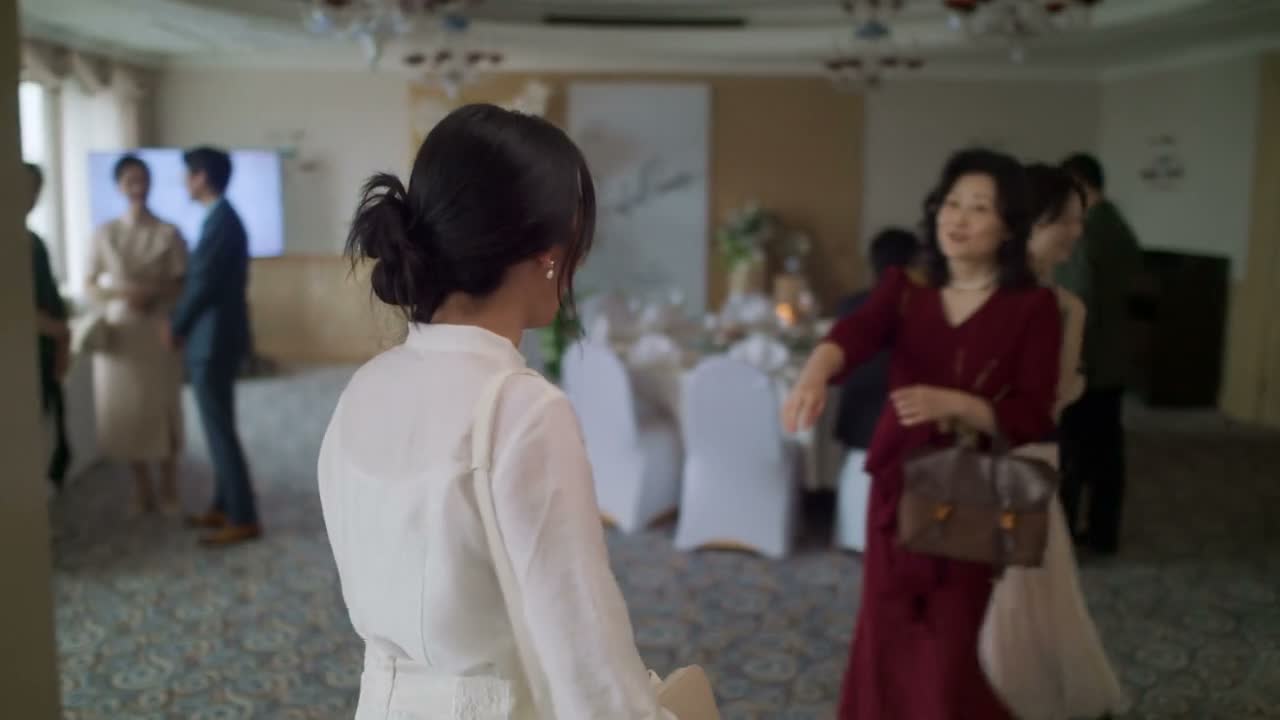
“Xiu. Auntie. Sorry I'm late.”

“No thanks, Ma'am. I'm good.”

“It's OK. I'm here.”

“I'm so happy. Mrs. Jun.”

“I can't force you.”

“I know, Auntie. Please help me keep an eye on him.”