你吓死我了 你一点声都没有
“You scared me. You didn't even make a sound.”
THE DIALOGUE REEL
饭在锅里 饿了就吃啊 我不饿 我先不吃了
“There's rice in the pot. Help yourself. I'm not hungry. I'm skipping dinner.”
你吓死我了 你一点声都 没有
“You scared me. You didn't even make a sound.”
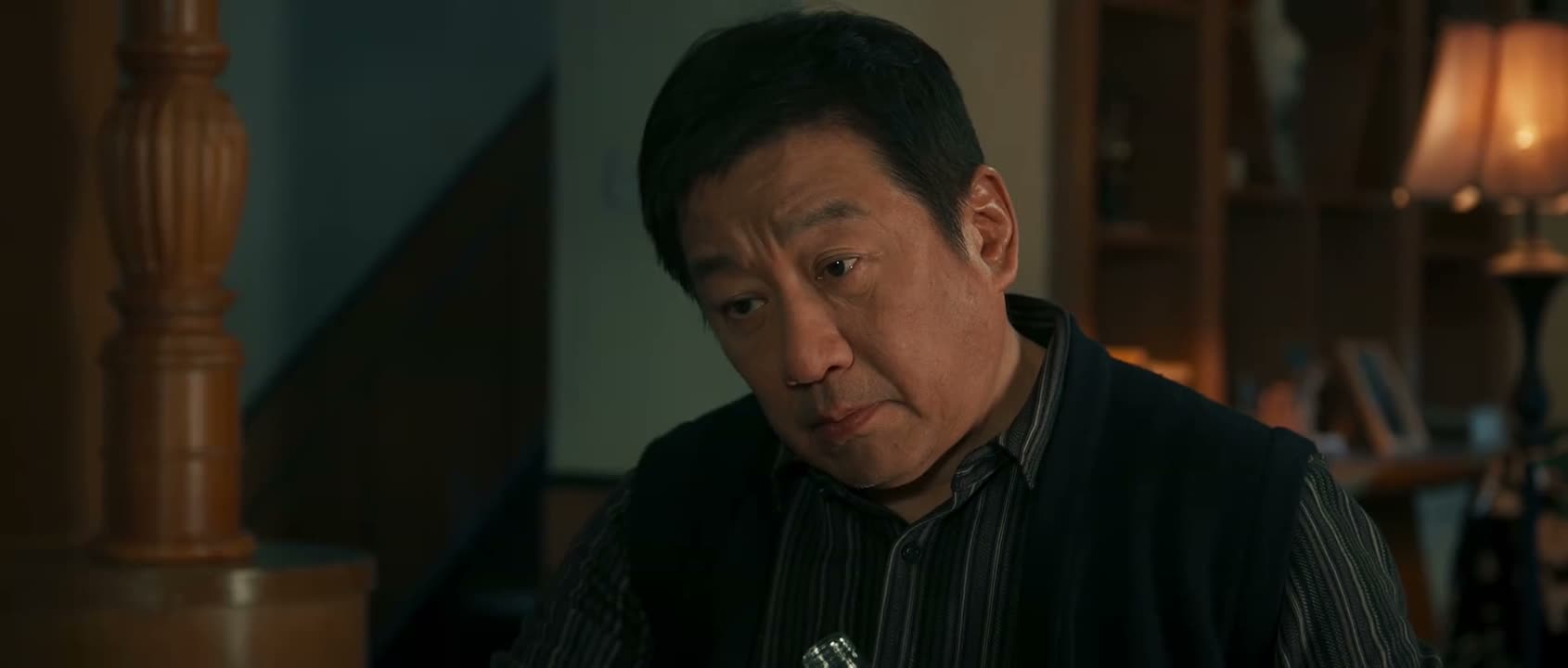
“Ni seems to be down and preoccupied.”
Direct spoken expression in this communicative setting.
Chinese speakers frequently attach '死我了' to verbs and adjectives (e.g., 累死, 气死, 吓死) for dramatic exaggeration in casual, intimate conversation without literal morbid connotations.
LEARNING CHUNKS & PARTICLES
Scared me to death
A highly frequent colloquial hyperbole used immediately after being startled or shocked.
Without making any sound at all
An emphatic structure ('一点...都+negation') expressing complete absence of noise.
Signals a completed change of state, expressing that the speaker was suddenly frightened.
VOCABULARY & EXPRESSIONS
Parallel Spoken Cinema Scenes (语义近邻切片)

“You scared me to death! What are you doing? Mr. Zheng? You finally came in.”

“You scared me to death.”
“you scared me to death!”