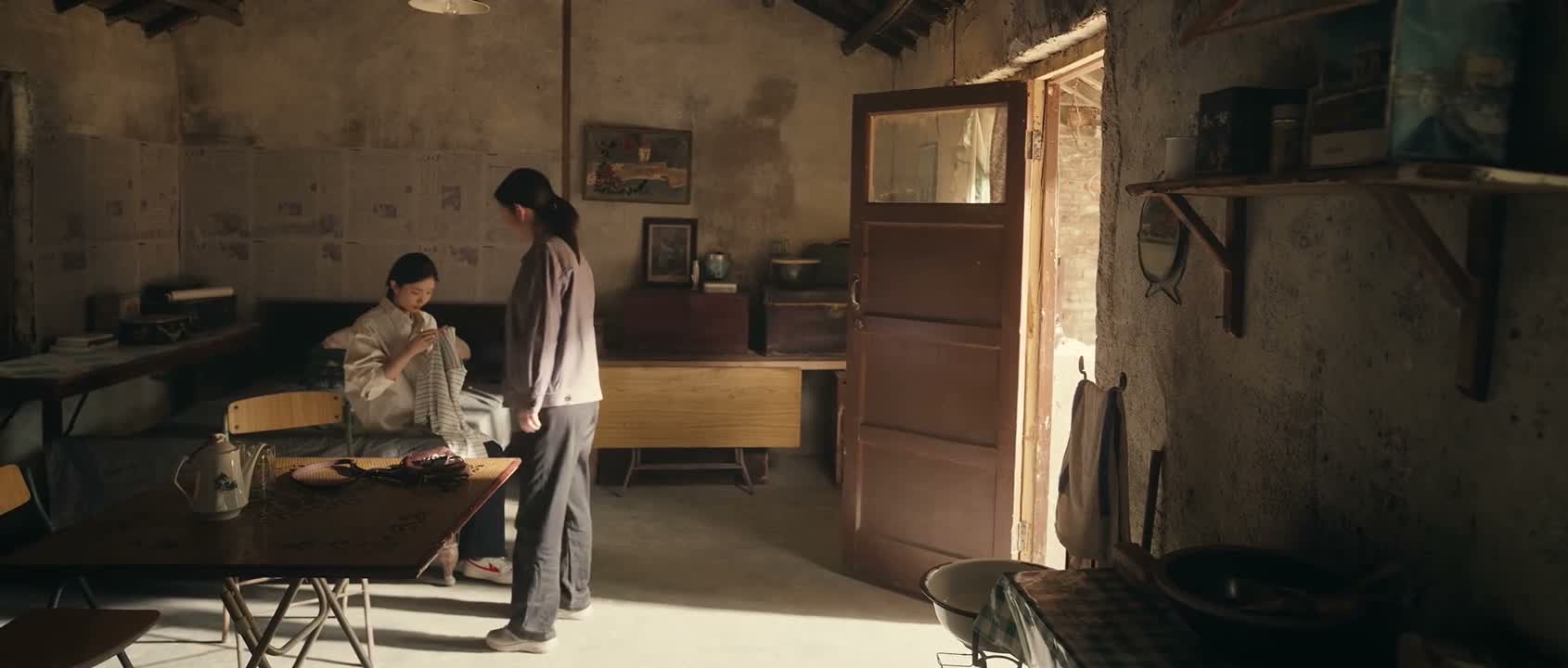
缝衣服和缝人能一样吗
“Sewing clothes and sewing a person are different things!”
THE DIALOGUE REEL
怎么了这是 不至于吧 不就是看人缝衣服的吗
“What's wrong? Seriously? Isn't it just like watching someone sew clothes?”
缝衣服和缝人 能一样吗
“Sewing clothes and sewing a person are different things!”
好 好 好 都跟你说了 别看小碗儿验尸了
“Fine, fine. I told you not to watch Little Wan'er perform the autopsy,”
Direct spoken expression in this communicative setting.
Native speakers frequently use rhetorical polar questions ('能一样吗') to convey immediate exasperation and reject invalid comparisons without polite cushioning.
LEARNING CHUNKS & PARTICLES
how can they be the same?
A very common rhetorical question pattern used to emphasize an obvious, vast contrast.
Forms a rhetorical question that sharply highlights the absurdity of the previous statement.
VOCABULARY & EXPRESSIONS
Parallel Spoken Cinema Scenes (语义近邻切片)

“I'm doing odd brokerage gigs now.”

“sewn a single stitch for me.”

“is wash clothes, cook meals, and sew.”

“You sewed this for him yourself?”

“It's as good as a sewing machine. I practiced on the operating table.”
“I can still wear it if I mend it.”