没 我真没有 我怎么可能觉得你错了
“No. Absolutely not. How could I think you're wrong?”
THE DIALOGUE REEL
没 我 真没有 我 怎么可能 觉得 你错了
“No. Absolutely not. How could I think you're wrong?”
“You're right. You're always right. How could you ever be wrong?”
“Please stop attacking me, I'll agree with whatever you say just to drop this.”
In close Chinese relationships, when one party becomes emotionally agitated, the other often uses immediate complete surrender or hyper-agreement to appease anger before reason can prevail.
LEARNING CHUNKS & PARTICLES
really do not / really didn't
A high-frequency colloquial phrase used to emphatically deny an accusation or suspicion.
how could it be possible; no way
Used in rhetorical questions to strongly reject an allegation or proposition.
Follows the verb to mark an evaluated state of correctness or wrongdoing.
VOCABULARY & EXPRESSIONS
Parallel Spoken Cinema Scenes (语义近邻切片)

“Don't! I'm sorry. -I've made a mistake. -A mistake? I'm sorry. It's too late.”
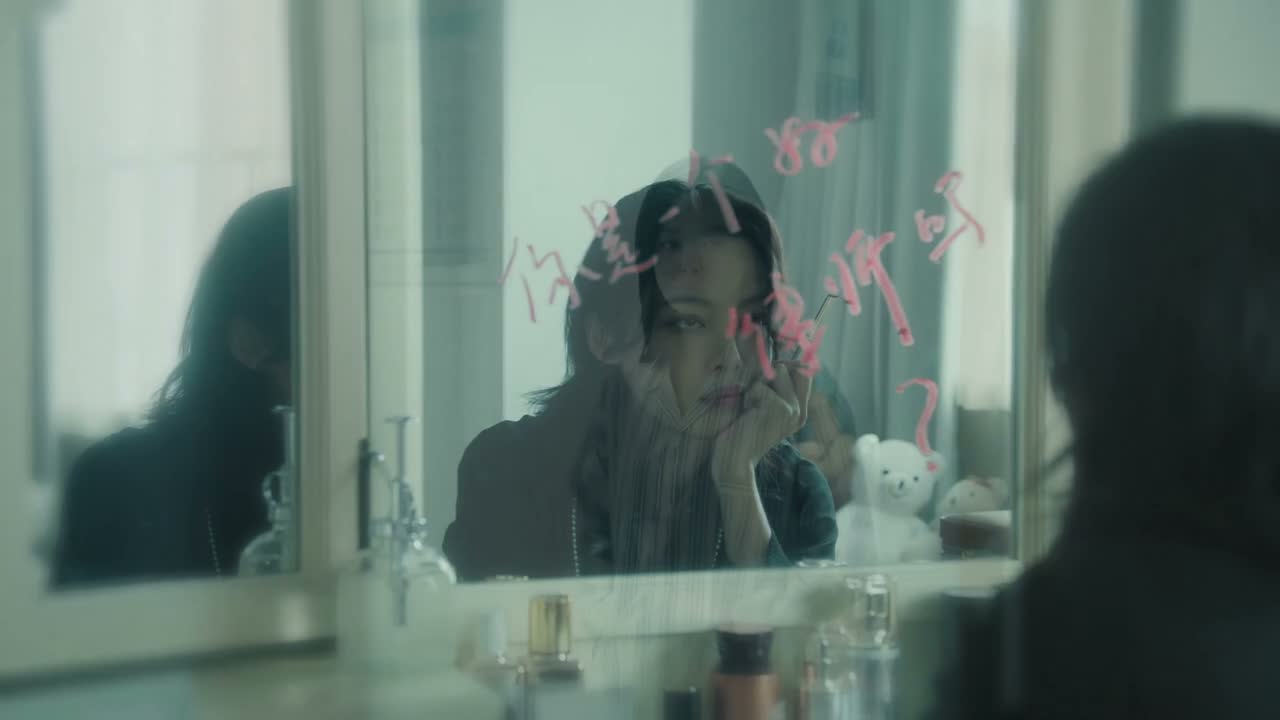
“Maybe it's saying "You're not wrong."”

“I really didn't do that. I'm telling the truth.”