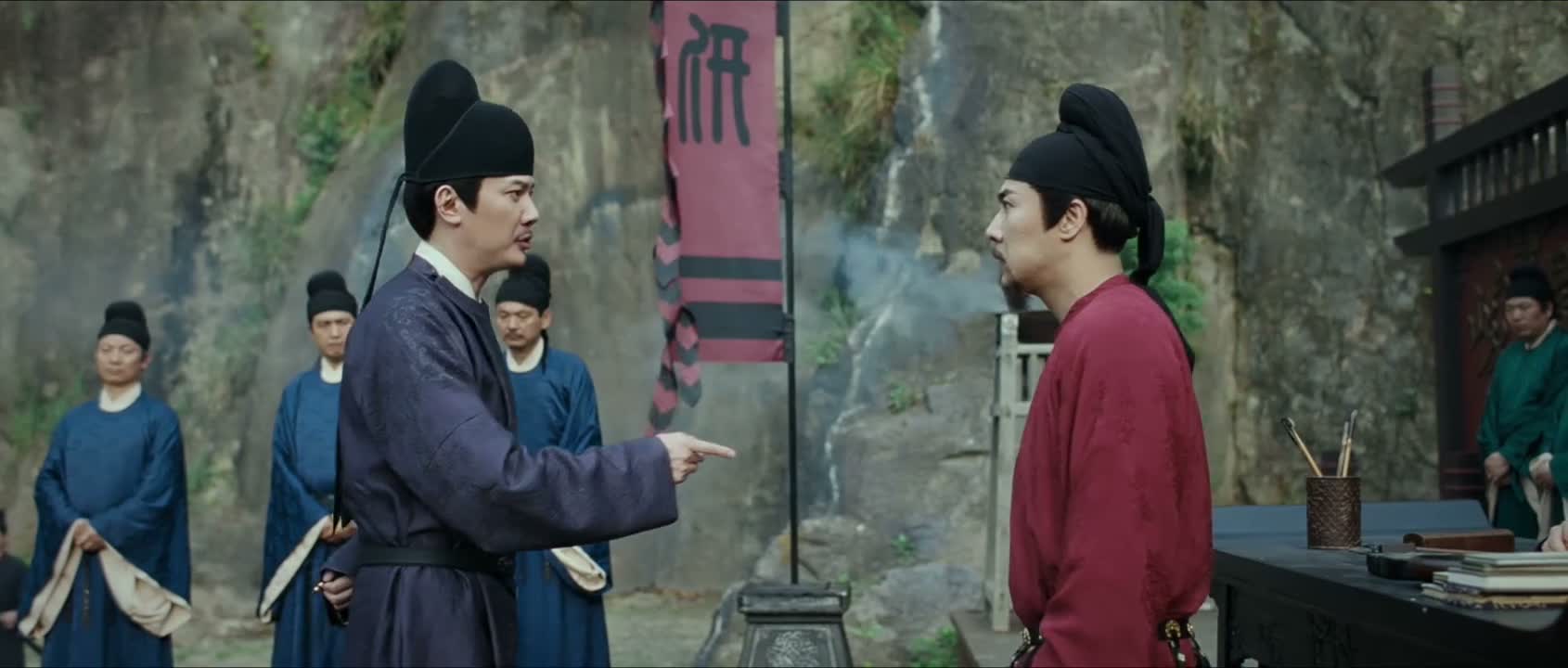
本侯可曾亏待过诸位分毫
“Have I ever mistreated any of you in the slightest?”
THE DIALOGUE REEL
诸位受本侯提携
“you've received my support.”
本侯 可曾亏待过 诸位分毫
“Have I ever mistreated any of you in the slightest?”
若有人再胆敢欺瞒
“If anyone dares to hide something from me again,”
“I have treated you generously, so you have zero excuse to betray me.”
In historical Chinese hierarchical structures, patrons provided favors and protection (恩), which demanded absolute moral and political loyalty from subordinates in return.
LEARNING CHUNKS & PARTICLES
have ever (in formal or literary contexts)
A rhetorical marker used in formal speech to emphasize that something has never occurred or to challenge an assertion.
to treat unfairly; to shortchange
Frequently used by superiors or hosts when emphasizing their generosity or fairness toward others.
in the slightest; a tiny fraction
Used in negative or rhetorical constructions to denote 'not even the smallest amount'.
VOCABULARY & EXPRESSIONS
Parallel Spoken Cinema Scenes (语义近邻切片)

“I haven't held you accountable yet,”

“Have you ever truly cared about my happiness or sorrow?”

“I... I...”

“are always unforgivable.”

“I had important duties to attend to,”
“Did you live up to the court's trust?”