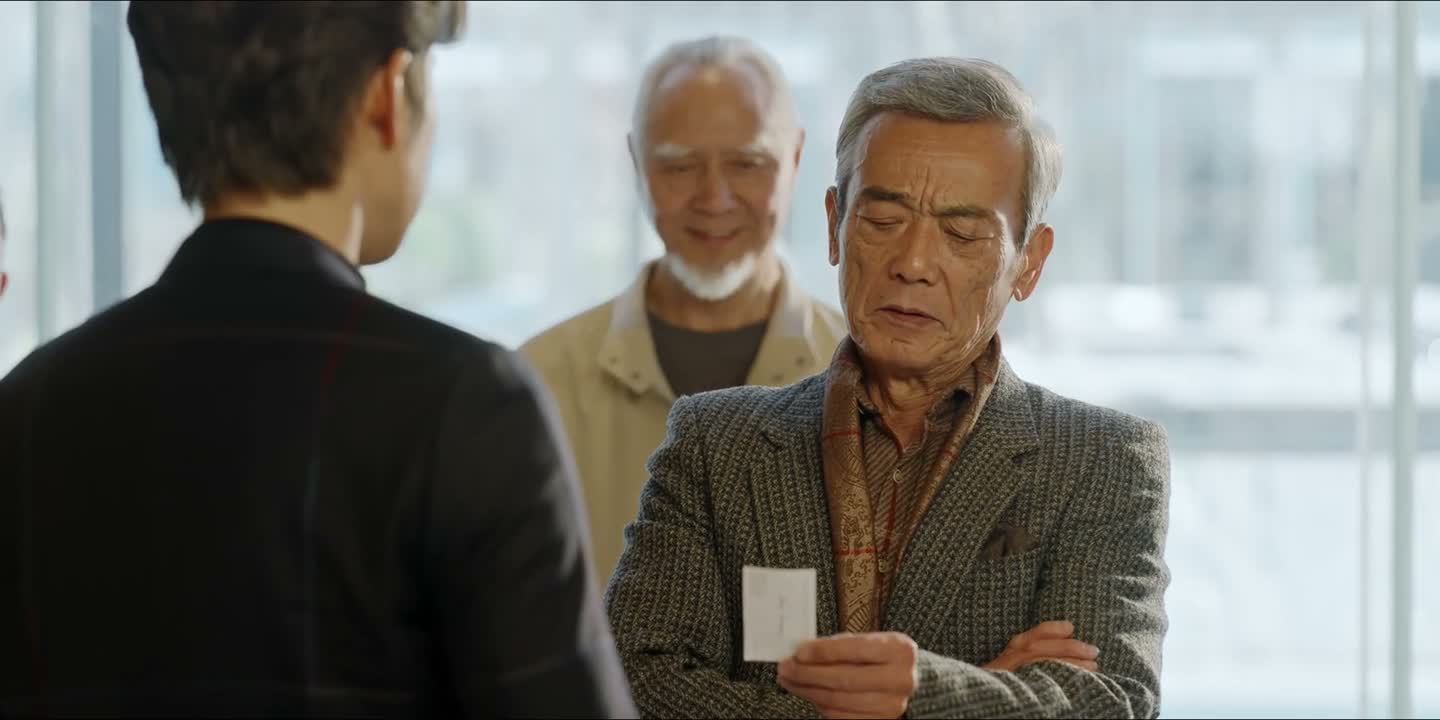
父母年纪大了 得回家尽孝了
“My parents are getting on in years, so I must go be with them.”
THE DIALOGUE REEL
我得回去看他
“I must go be with him.”
父母 年纪大了 得回家尽孝了
“My parents are getting on in years, so I must go be with them.”
最近太累了 我想四处走走 散散心 对
“I've been worn out lately, and want to travel around to unwind. Right.”
Direct spoken expression in this communicative setting.
Filial devotion is paramount in Chinese ethics; invoking the care of aging parents serves as an absolute, universally respected justification for departing or resigning.
LEARNING CHUNKS & PARTICLES
getting on in years; elderly
A polite and affectionate euphemism to describe parents or elders growing old.
to fulfill filial duty; to care for one's aging parents
Often combined with verbs like '回家' (return home) to express an ethical imperative in traditional Chinese culture.
Marks a change of state or emerging situation requiring action.
VOCABULARY & EXPRESSIONS
Parallel Spoken Cinema Scenes (语义近邻切片)

“from the next 2 years goes to you. Your child's schooling and elderly care—”

“if you honor him like an elder in the family.”

“A few days ago, an elder at home passed away. They all went back.”
“elderly people.”