是在江郎才尽的情况下 抄袭了我的作品
“So Liu Xiaoran plagiarized my work after he lost his creative inspiration.”
THE DIALOGUE REEL
所以刘潇然
“So Liu Xiaoran plagiarized my work after he lost his creative inspiration.”
是在 江郎才尽 的 情况 下 抄袭了我的 作品
“So Liu Xiaoran plagiarized my work after he lost his creative inspiration.”
他自己亲口承认的
“He admitted it himself.”
“He is an uninspired fraud who had to steal my brilliant work.”
The idiom 'Jiang Lang Cai Jin' references a historical poet who lost his divine writing brush in a dream; using it carries sharp literary contempt toward creative bankrupts.
LEARNING CHUNKS & PARTICLES
at one's wits' end / running out of creative talent
A classic four-character idiom (chengyu) describing an artist, writer, or scholar who has exhausted their creative inspiration.
to plagiarize / plagiarism
Standard term for intellectual property infringement and academic or artistic copying.
VOCABULARY & EXPRESSIONS
Parallel Spoken Cinema Scenes (语义近邻切片)
“At most, they'll call me a plagiarist, say I've run out of ideas.”
“If I keep writing, people will just say I've lost my talent.”
“Bad endings, plagiarism, being washed up... Who cares?”

“(Have they run out of ideas?) (Sky Fire is the best!) (Sky Fire is the ultimate)”
“that He Han is at his wits' end and can't write anything good anymore.”
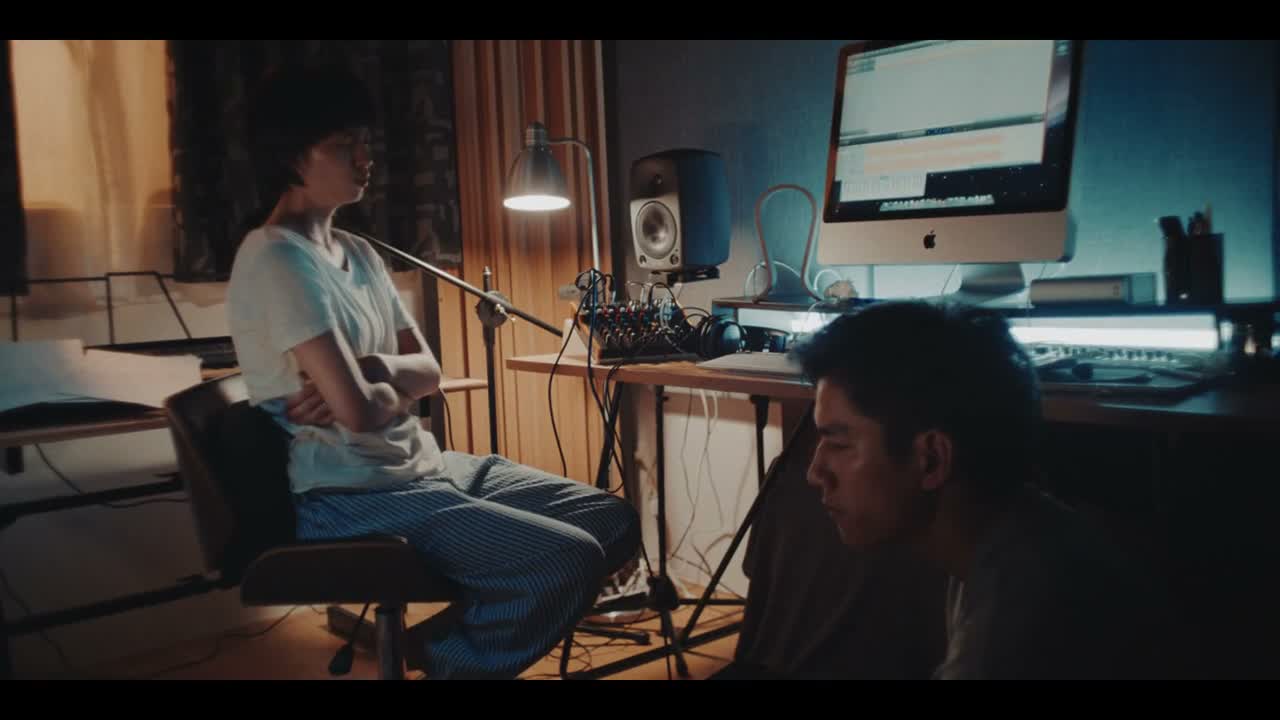
“I seriously don't get it. You can obviously write your own music.”