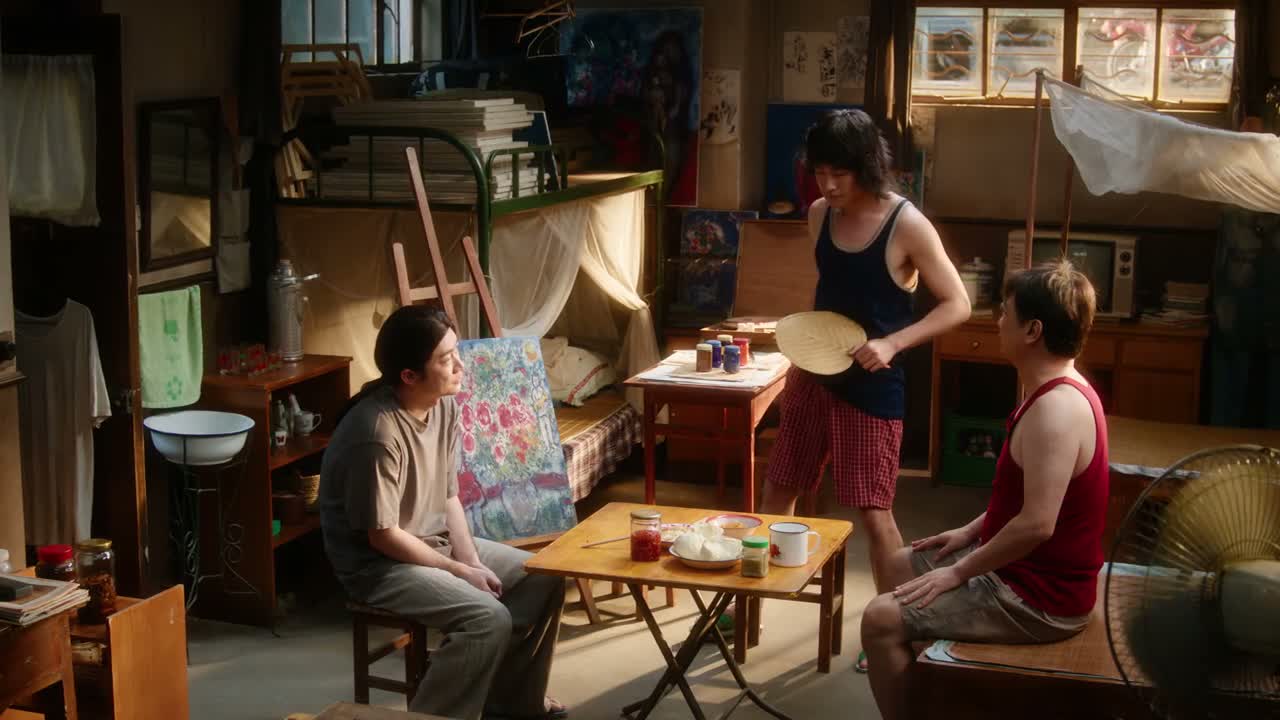
天天这么闹 还怎么干活
“How can we work then?”
THE DIALOGUE REEL
应该是我小学那会儿
“Probably when I was in elementary school.”
天天这么闹 还怎么干 活
“How can we work then?”
还不如赶紧搬了算了
“Might as well just move out.”
“This endless chaos is completely intolerable; we cannot stay here.”
In spoken Chinese, rhetorical questions framed with '还怎么...' are a staple device for expressing exasperation rather than genuinely asking for a solution.
LEARNING CHUNKS & PARTICLES
making such a fuss every single day
A colloquial phrase used to complain about repetitive, disruptive noise or drama.
how can anyone still get work done
A rhetorical question conveying impossibility and intense annoyance.
VOCABULARY & EXPRESSIONS
Parallel Spoken Cinema Scenes (语义近邻切片)

“She keeps making a loud noise every day.”

“Let her ask her husband for it. Why raise a fuss here? You're absolutely right.”

“Now it has become a complete uproar.”
“a bit too far.”

“They work their fingers to the bone every day.”

“Just let him cause some trouble. The bigger the trouble, the better.”