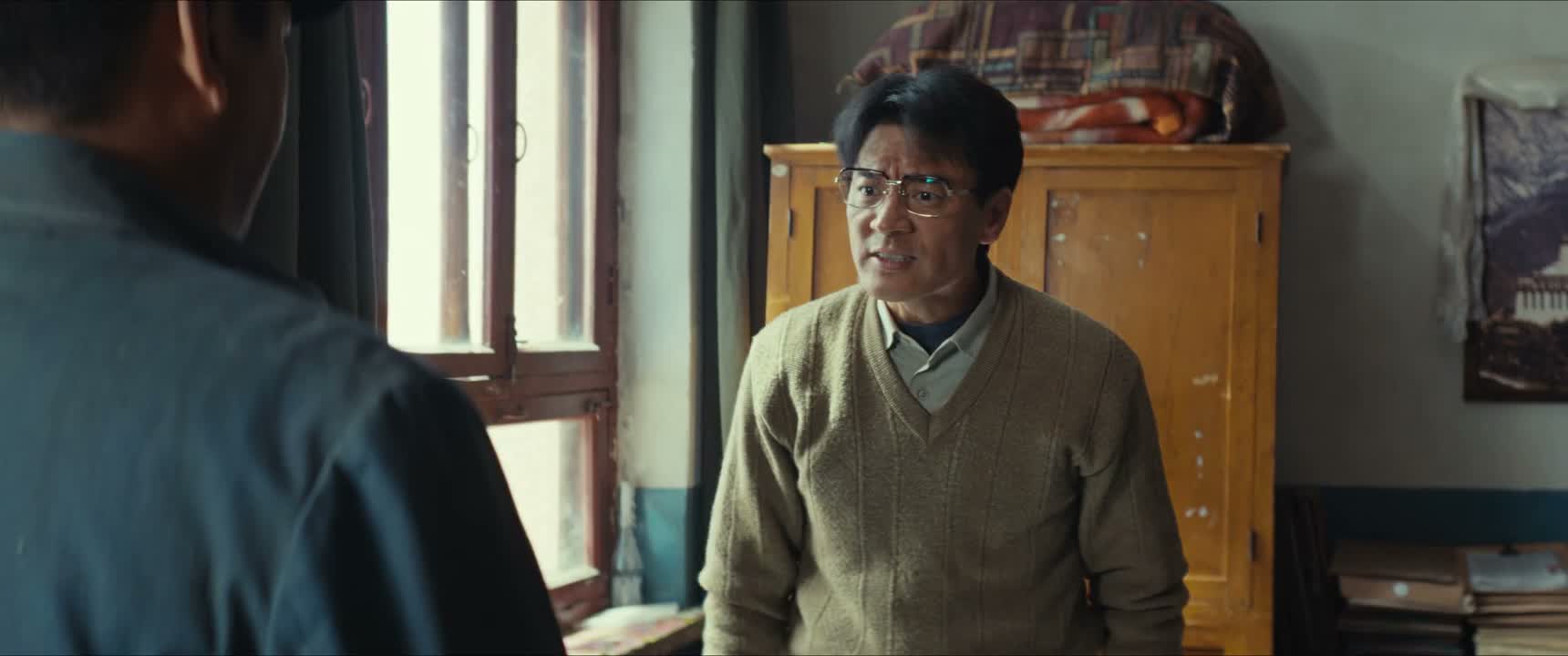
抢东西的不是你的人吗
“Wasn't it your man who stole it?”
THE DIALOGUE REEL
董小姐 在你的船上丢了东西 你的责任 不对吧
“Miss Dong, I lost something on your ship. You should take responsibility for it. That's not quite right.”
抢东西 的 不是你的 人 吗
“Wasn't it your man who stole it?”
“Don't play dumb with me; your own goons staged this entire robbery.”
In high-stakes conflicts, confronting someone directly with evidence of their faction's involvement is crucial to avoid taking the blame (背锅) for their orchestrated scheme.
LEARNING CHUNKS & PARTICLES
to rob / to snatch belongings
A colloquial way to describe robbery, looting, or physical theft.
your people / your subordinates
Used to denote people belonging to someone's faction, crew, or entourage.
Forms a rhetorical question that asserts a strong challenge rather than seeking new information.
VOCABULARY & EXPRESSIONS
Parallel Spoken Cinema Scenes (语义近邻切片)

“Did Xu take away something of yours?”

“My stuff was cleared away. I...”

“Now you're stealing from us?”

“We can't take the things that others throw away.”

“You took the money you robbed”
“You're stealing stuff now?”