你这脑袋可真够硬的啊 没把人家车撞疼吧
“Your head is really hard. Didn't hurt his car, did you?”
THE DIALOGUE REEL
就是被你们吐口水那位
“The one you spat on.”
你这 脑袋可真够硬 的啊 没把 人家 车撞疼吧
“Your head is really hard. Didn't hurt his car, did you?”
明天不是六一吗 孙叔叔说晚上带咱们去
“Tomorrow is Children's Day. Mr. Sun said he'll take us to the carnival in La City at night.”
“You were reckless, but thank goodness you're not badly hurt.”
In close Chinese relationships, people often express deep affection or relief after a close call through playful mockery rather than overt sentimental comfort.
LEARNING CHUNKS & PARTICLES
really quite; certainly enough
Used in spoken Chinese to emphasize an extreme degree, often with mild irony or exaggeration.
to hurt by colliding with something
A common verb-resultative compound used playfully here by personifying the car.
Softens the rhetorical exclamation and adds an informal, teasing flair.
Solicits confirmation while conveying a facetious, teasing tone.
VOCABULARY & EXPRESSIONS
Parallel Spoken Cinema Scenes (语义近邻切片)

“I was just worried you'd hurt your head again,”

“you smashed my car like this,”
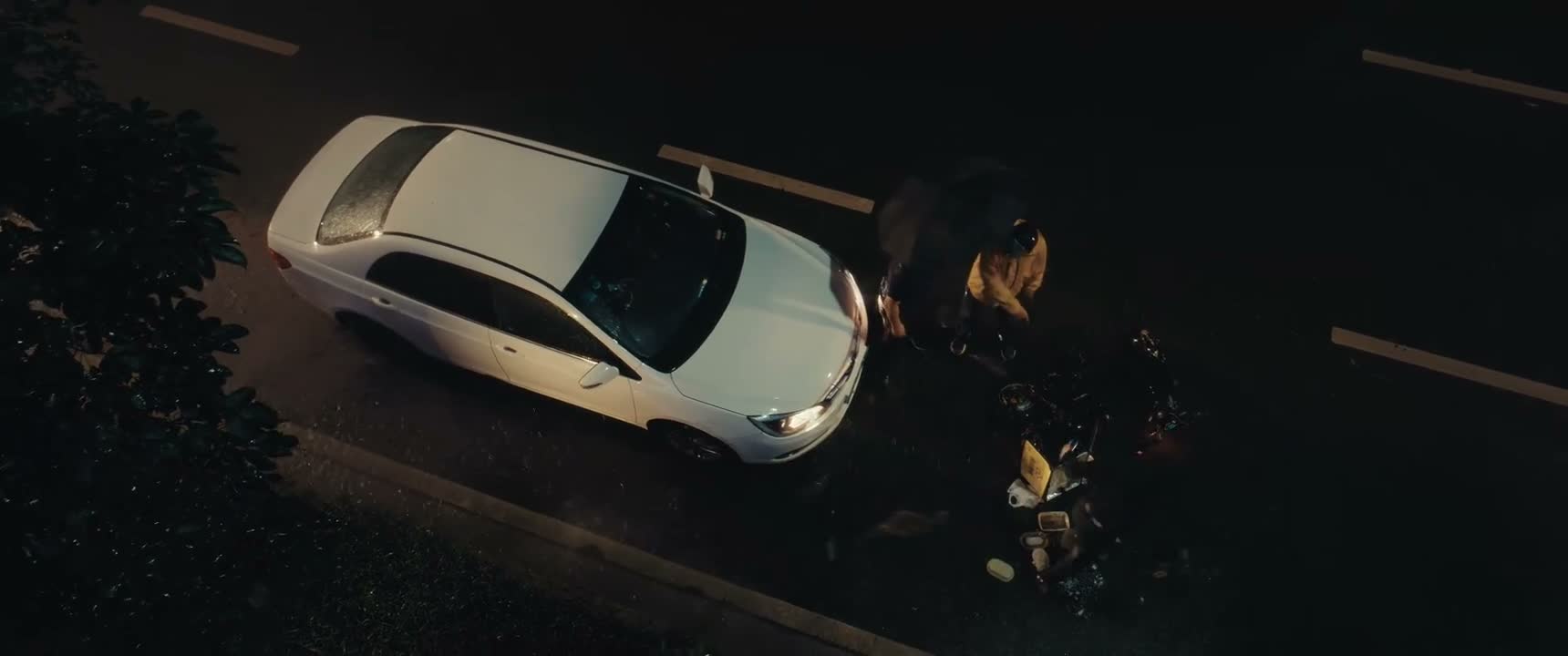
“I'm injured. You crashed into my car. What else do you want?”

“Maybe he just hit his head”

“If you had hit a car, you should have died.”

“Did you hit your head?”