奴籍赎回便走
“Once her servile status is redeemed, she will leave.”
THE DIALOGUE REEL
跟舞娘谈妥了
“She has already reached an agreement with the dancers.”
奴籍 赎回 便走
“Once her servile status is redeemed, she will leave.”
Direct spoken expression in this communicative setting.
In imperial China, entertainers and servants were often bound by 'nuji' (lowly/slave household status). To gain freedom and live as a commoner, one had to pay a sum to officially buy back their contract and restore their status.
LEARNING CHUNKS & PARTICLES
to redeem / to buy back
Used when paying money to reclaim pawned items, property, or (in historical contexts) a person's freedom.
will leave immediately / then leave
A literary or formal way to say 'then leave' right after a condition is met; in modern spoken Chinese, '就走' is more common.
VOCABULARY & EXPRESSIONS
Parallel Spoken Cinema Scenes (语义近邻切片)

“for me to escort you home.”

“For those willing to take the grain and go home,”
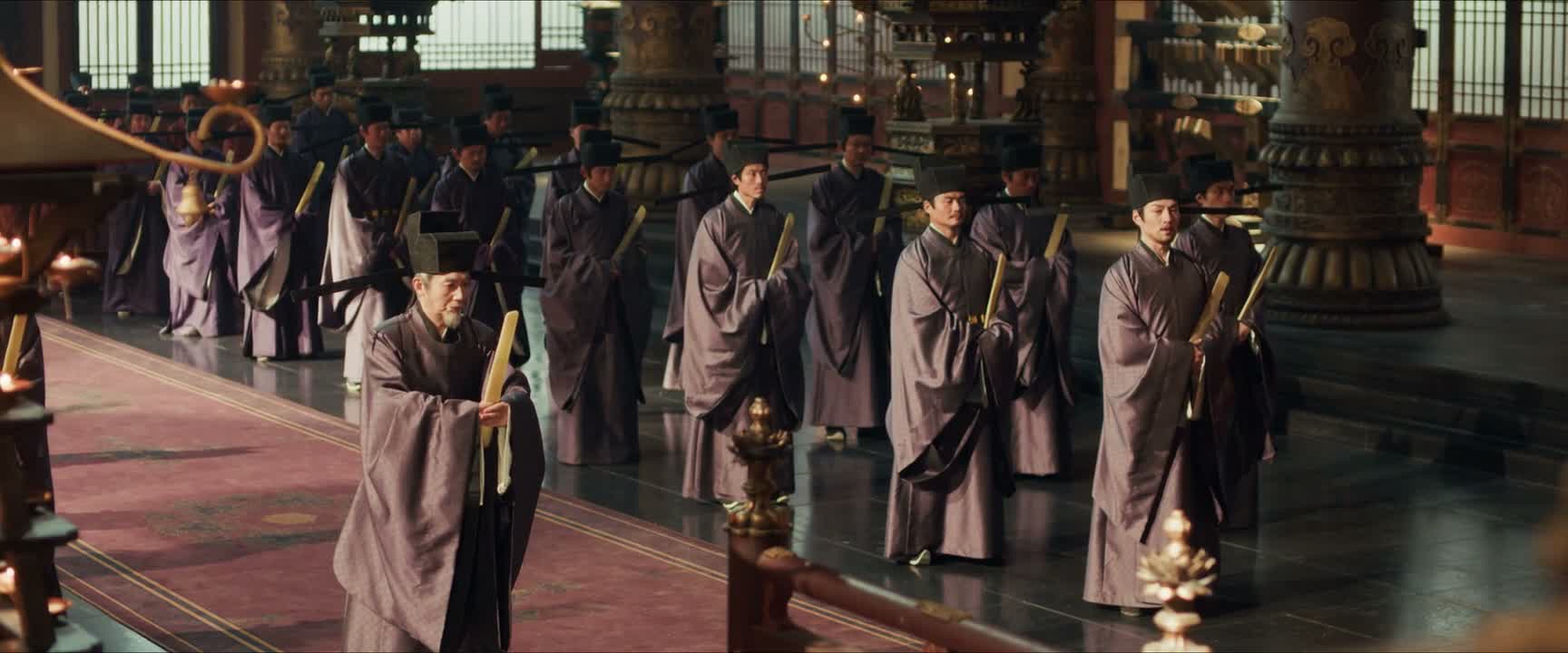
“we can return it to the people.”

“to atone for your sins this way.”

“Protecting the people of Jiaozhou is your sworn duty.”

“and rush here in the dead of night?”