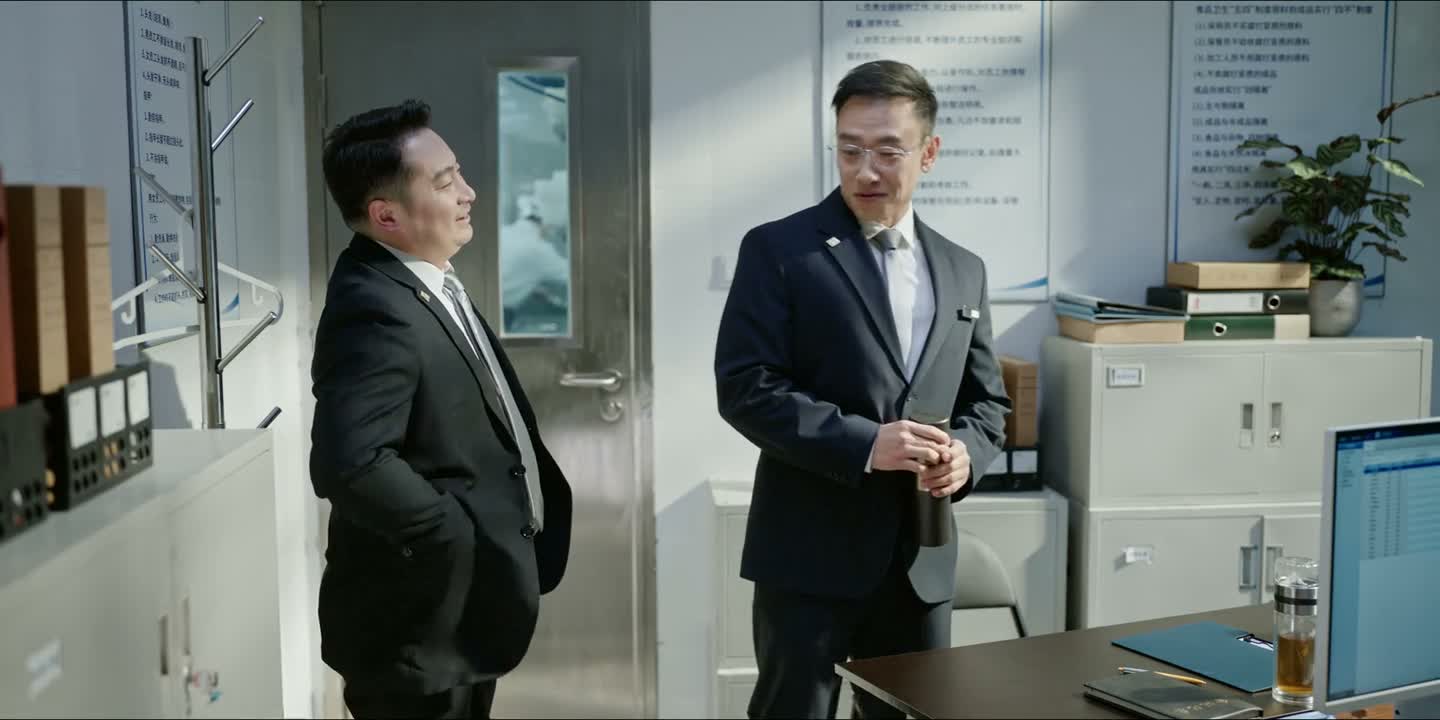
你这不见外了 见外了啊
“You're acting like a stranger. Like a stranger.”
THE DIALOGUE REEL
你说的啊 中午别跟我借饭票
“You said it. Don't ask to borrow meal tickets at noon.”
你 这不 见外 了 见外 了啊
“You're acting like a stranger. Like a stranger.”
郭顺啊郭顺
“Oh, Guo Shun.”
“Come on, don't take what I said seriously! We're buddies, you still have to lend me that meal ticket at noon.”
Chinese social dynamics heavily emphasize the boundary between 'insiders' (ziji ren) and 'outsiders' (wairen). Accusing a friend of being 'jianwai' (acting like an outsider) is a classic way to reinforce intimacy or cheekily ask for favors.
LEARNING CHUNKS & PARTICLES
to treat someone like an outsider / to be overly polite or distant
Commonly used as '别见外' (don't be a stranger) by hosts, or '你这就见外了' (now you're treating me like an outsider) to guilt or charm friends into sharing resources.
Indicates a new situation or crossing a threshold (becoming too distant).
Softens the repetition and adds a wheedling, familiar tone to smooth over the tension.