七哥 莫生气 不喜欢 让她们走就是了
“Chi, don't be angry. Since you're not into it, I've sent them away.”
THE DIALOGUE REEL
快走
“Go!”
七哥 莫生气 不喜欢 让她 们走 就是了
“Chi, don't be angry. Since you're not into it, I've sent them away.”
你这么想用歌舞的形式为我接风 那你就自己上来跳
“If you want to welcome me with singing and dancing, why don't you dance yourself?”
“Please calm down and don't take your anger out on me; I'll get rid of them right away.”
In Chinese hospitality, 'Jiefeng' (literally 'catching the wind/dust') is a welcome feast hosted for someone returning from a long journey. In historical or high-status settings, arranging music and dance was standard etiquette to show respect.
LEARNING CHUNKS & PARTICLES
do not be angry
'莫' is a classical or dialectal negation word meaning 'do not'. In modern speech, it sounds slightly literary, poetic, or playfully dramatic.
that's all; will simply do that
Placed at the end of a clause to make a problem sound easy to resolve, reassuring the listener that their wish will be easily granted.
Used at the end of '就是了' to soften the tone and signal finality and reassurance in resolving the issue.
VOCABULARY & EXPRESSIONS
Parallel Spoken Cinema Scenes (语义近邻切片)

“Chi, who normally shows no courtesy to women,”
“Qi, you're talking a bit too much today.”
“Qi, let me tell you the truth.”

“Chi, you're finally here. I missed you terribly.”

“♪ And walk through this journey with me ♪ Chi. Are you hurt? Are you okay?”
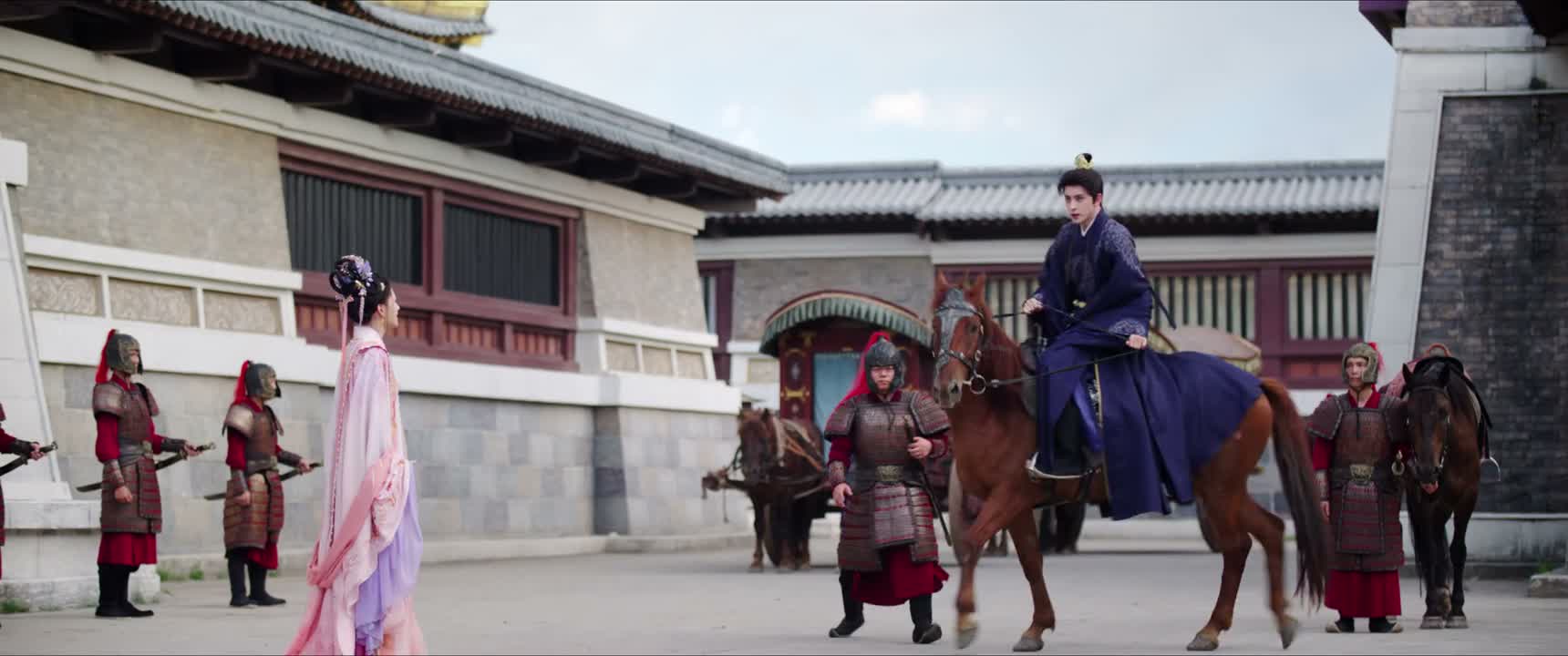
“Chi! Agree to it before you go!”