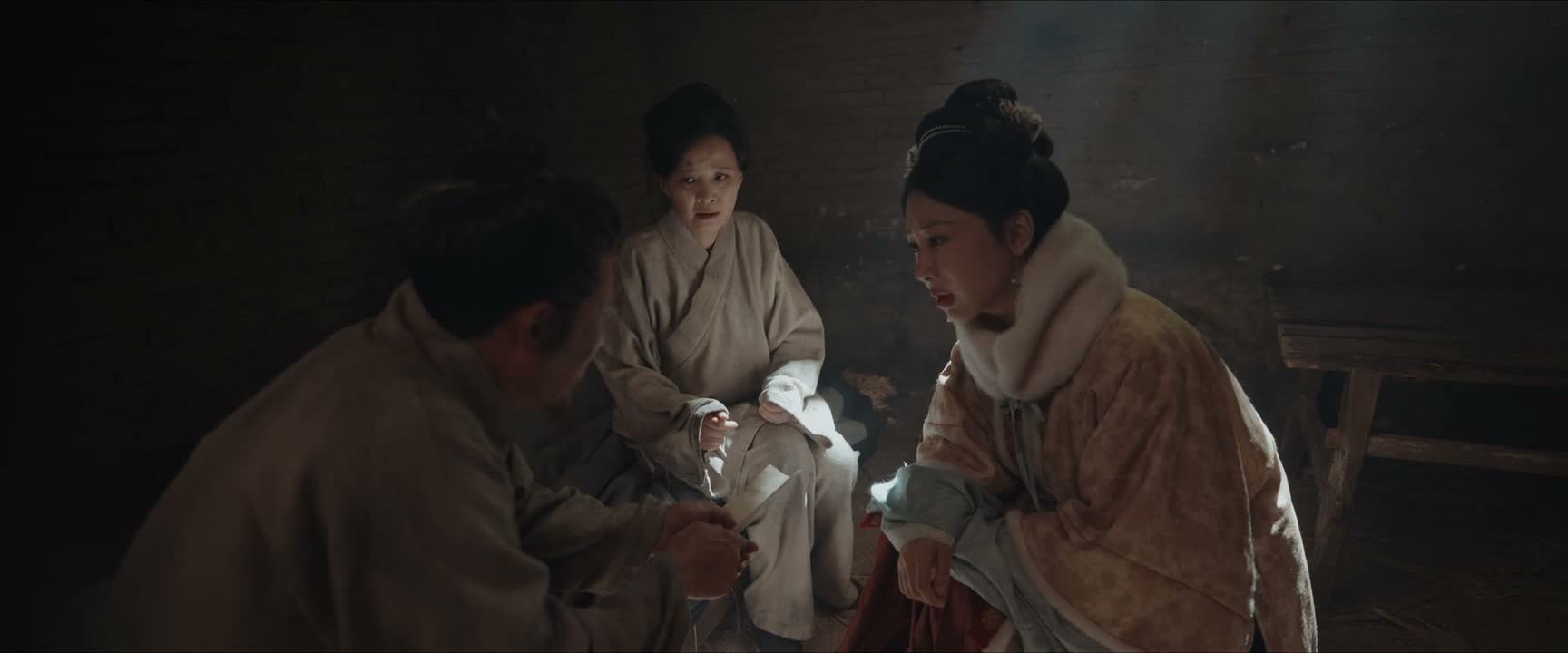
您难道还没明白吗 田本昌连自己的亲妹妹
“do you still not understand? Tian Benchang could even abandon”
THE DIALOGUE REEL
祯娘说这个到底是什么意思 田夫人
“What exactly does Zhen mean by this? Madam Tian,”
您 难道还没明白 吗 田本昌 连自己 的 亲妹妹
“do you still not understand? Tian Benchang could even abandon”
都能卖得了
“and make use of his own sister.”
“Wake up! If he can betray his own flesh and blood, he will definitely betray you too.”
In traditional Chinese morality, loyalty to immediate blood relatives is paramount; betraying one's own sibling is viewed as the ultimate proof of moral bankruptcy.
LEARNING CHUNKS & PARTICLES
don't you understand yet? / could it be that you still don't get it?
Use '难道...吗' to form a strong rhetorical question when expressing disbelief or frustration that someone hasn't realized something obvious.
biological younger sister
Add '亲' before kinship terms to emphasize blood relation as opposed to cousins or sworn siblings.
Paired with '难道', it intensifies the rhetorical question to express exasperation rather than seek an actual answer.
VOCABULARY & EXPRESSIONS
Parallel Spoken Cinema Scenes (语义近邻切片)

“in Tian Benchang's eyes, you are not his sister.”

“there's also a man named Tian Benchang in Huizhou. What a shame.”

“I, Tian Benchang, today acknowledge you as my own older brother.”

“Keep a close eye on Tian Benchang.”

“Tian Benchang has known our plan. What? But don't worry.”
“the only way out now is to find Tian Benchang,”