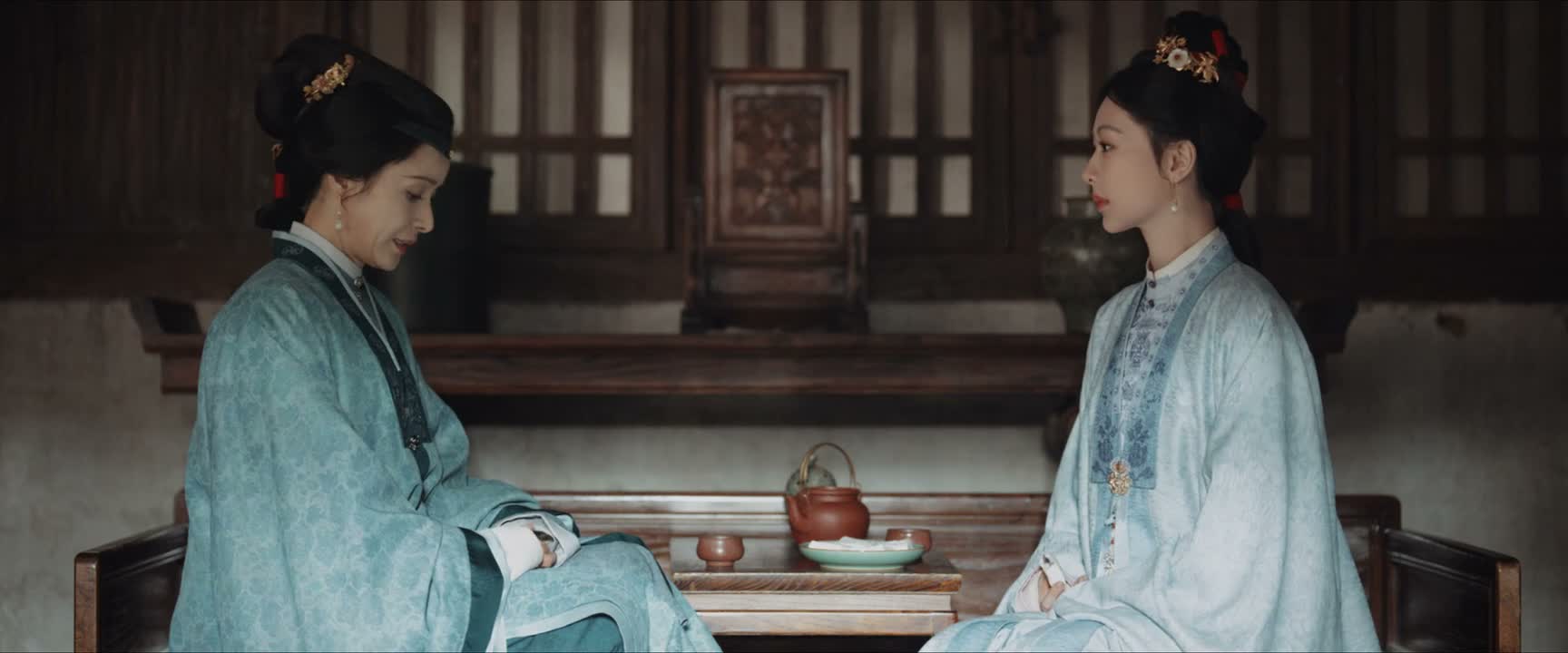
是大伯娘不好 大伯娘做错了
“It was my fault. I made a mistake.”
THE DIALOGUE REEL
大伯娘今天来 就是要郑重地向你道歉
“I came here today to formally apologize to you.”
是大伯娘 不好 大伯娘 做错了
“It was my fault. I made a mistake.”
都过去了
“It's all in the past.”
Direct spoken expression in this communicative setting.
In Chinese families, elders often refer to themselves by their kinship title (like 'Eldest Aunt' or 'Mom') rather than 'I' when speaking to juniors to emphasize family bonds and soften the tone.
Because Chinese culture heavily emphasizes seniority, an elder explicitly admitting fault to a younger relative involves giving up significant 'face' and signals deep sincerity.
LEARNING CHUNKS & PARTICLES
it is [someone's] fault; [someone] was in the wrong
A very common, idiomatic way to take personal blame in an apology (e.g., 'It is my fault').
did the wrong thing; made a mistake
Direct admission of wrongdoing in daily conversation.
Marks the completion of the mistaken action and confirms the current state of acknowledging guilt.