他拿回来就给放那门口了
“He brought it back and just left it by the door.”
THE DIALOGUE REEL
“Can I ever count on him for anything?”
他 拿回来 就给 放那门口了
“He brought it back and just left it by the door.”
那功放跟影碟机
“The amplifier and the VCD player were brought back in two separate trips.”
“See how useless he is? He just dumped the stuff at the entrance and didn't bother setting it up.”
In Chinese family life, venting about a spouse's or relative's lack of initiative in household chores is a common way to bond with other family members and seek emotional validation.
LEARNING CHUNKS & PARTICLES
to bring back; to take back
A directional verb complement used when moving an object back toward the speaker's current location or home.
to put; to place (with disposal nuance)
Adding 'gei' before a verb in spoken northern Chinese adds colloquial emphasis to how the action affected the object, often used when complaining.
Marks the completion of the action and emphasizes the resulting undesirable state of the item still sitting by the door.
VOCABULARY & EXPRESSIONS
Parallel Spoken Cinema Scenes (语义近邻切片)

“I'm hanging it by your door. See if there's anything else you need to check.”
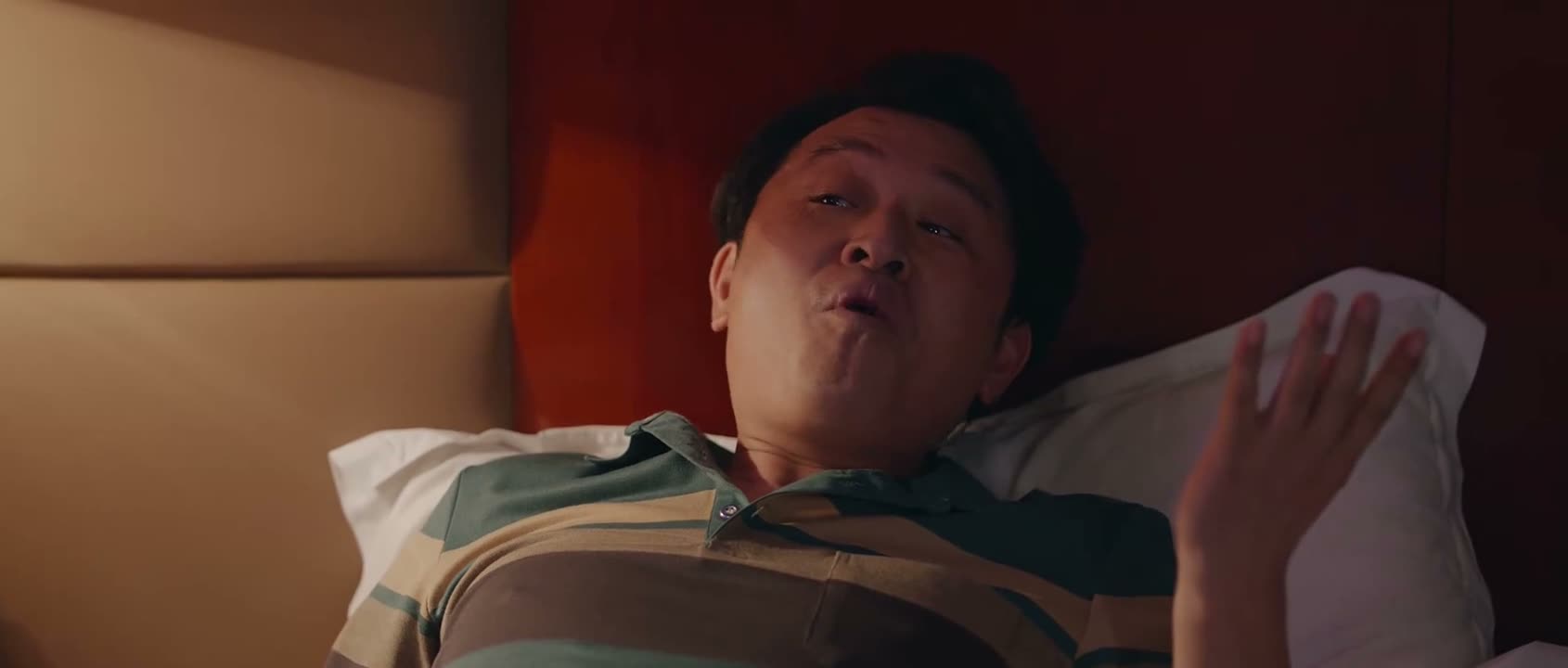
“I'd just blow him away.”

“Do not let this man in again.”

“These are the things you left at my place. I brought them over.”

“Keep an eye on that guy at the door. Don't let him in.”

“We have to take it home and clean it up first.”