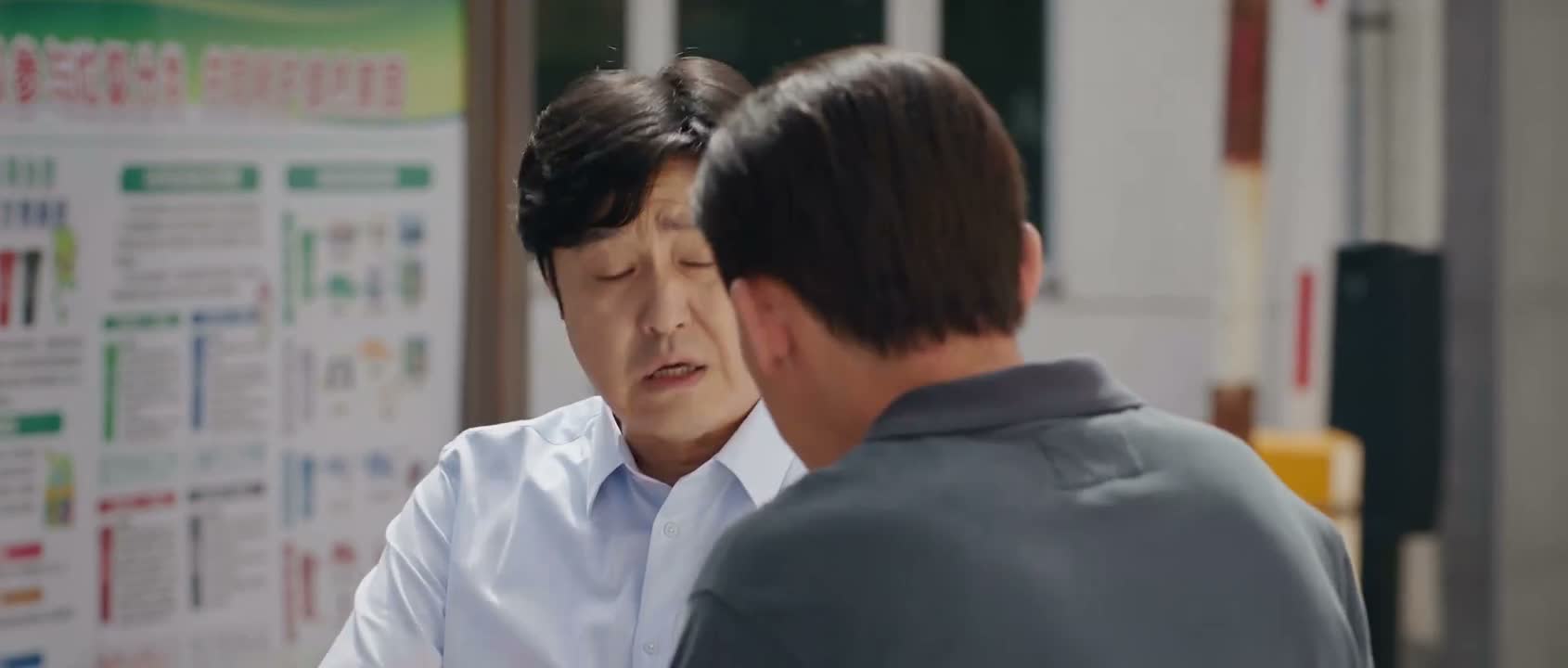
接下来几天应该会 张先生 我先回房间收拾一下
“The next few days should be... Mr. Zhang, I'm going back to my cabin to settle in.”
THE DIALOGUE REEL
我感觉咱们很合
“I think we really hit it off.”
接下来几天应该会 张先生 我先 回房间收拾 一下
“The next few days should be... Mr. Zhang, I'm going back to my cabin to settle in.”
“Let's meet here again in an hour.”
“You're getting too familiar too fast; I need to get away from you right now.”
Rather than flatly rejecting an uncomfortable compliment, Chinese speakers frequently change the subject or use a mundane chore as a socially graceful exit.
LEARNING CHUNKS & PARTICLES
return to the room first
A natural way to state one's immediate intention to depart from a conversation.
tidy up / pack up a bit
A common, universally acceptable pretext used to step away and leave a social interaction.
VOCABULARY & EXPRESSIONS
Parallel Spoken Cinema Scenes (语义近邻切片)

“I hope we get good news on Monday.”

“It's only been a few days, and I'm already leaving.”

“I'll need some more time before I can return.”

“Go wait for me in the study, will you?”

“you'd better wait in the mansion.”
“Alright, go home and wait for news.”