她不知道随谁了 这脾气
“I don't know whom she is like in temper.”
THE DIALOGUE REEL
不随我 也不随他妈
“She isn't like me, nor her mother.”
她 不知道随谁 了 这脾气
“I don't know whom she is like in temper.”
她是
“She is”
“She is impossible to manage, and I have no idea where she got such an awful temper.”
In Chinese family dynamics, attributing character or flaws to 'sui' (parental resemblance) is a common way to jokingly or critically trace temperament within the family tree.
LEARNING CHUNKS & PARTICLES
take after whom; resemble which relative
Colloquial Northern Chinese structure used to describe which parent or relative a child physically or temperamentally inherits traits from.
this temper; such an attitude
An inverted noun phrase tagged onto the end of a sentence to emphasize annoyance at someone's personality.
Marks an existing state or completed development, emphasizing the established fact of who she ended up taking after.
VOCABULARY & EXPRESSIONS
Parallel Spoken Cinema Scenes (语义近邻切片)

“but I truly don't know where she is. We were just about to catch her,”

“I wonder who she was targeting.”

“(I wonder who she was targeting.)”

“No one else knows. Do not tell anyone.”
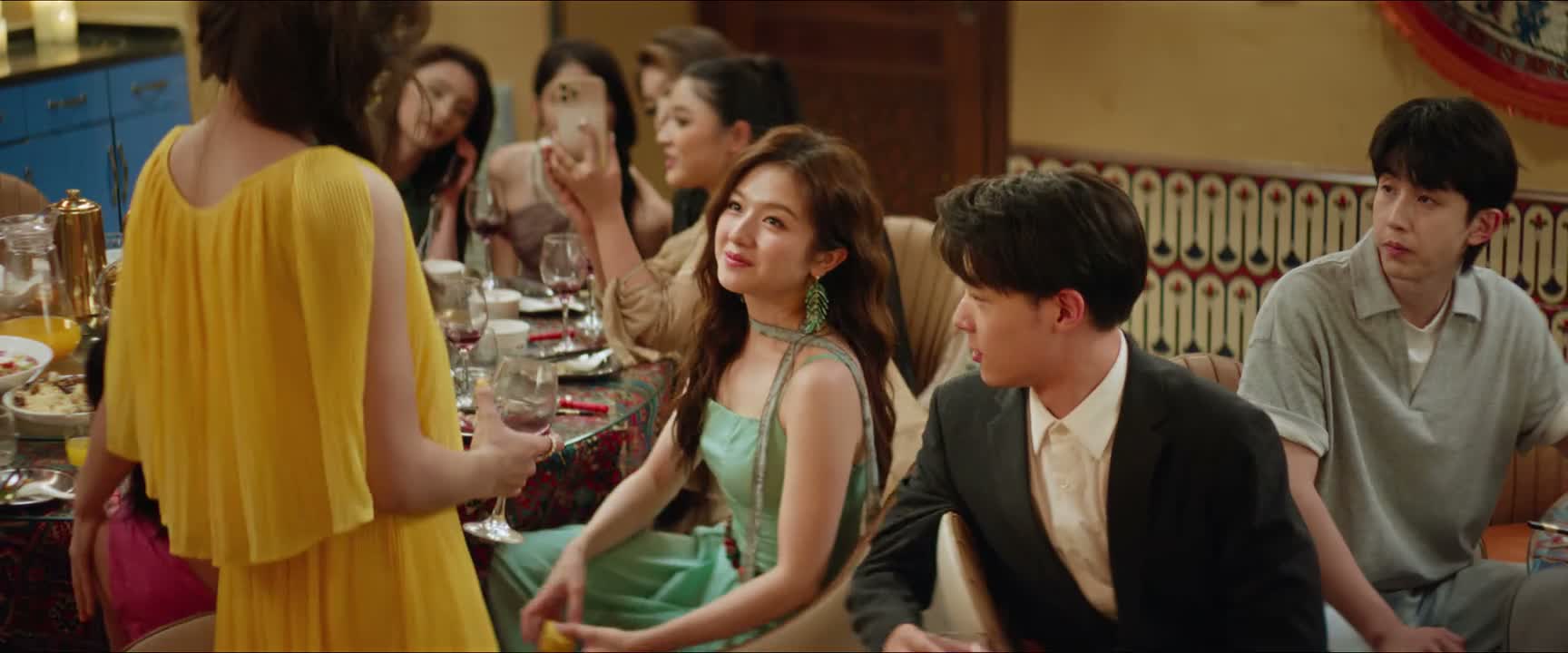
“Everyone knows he's here for you.”

“She doesn't know that I'm in love with her”