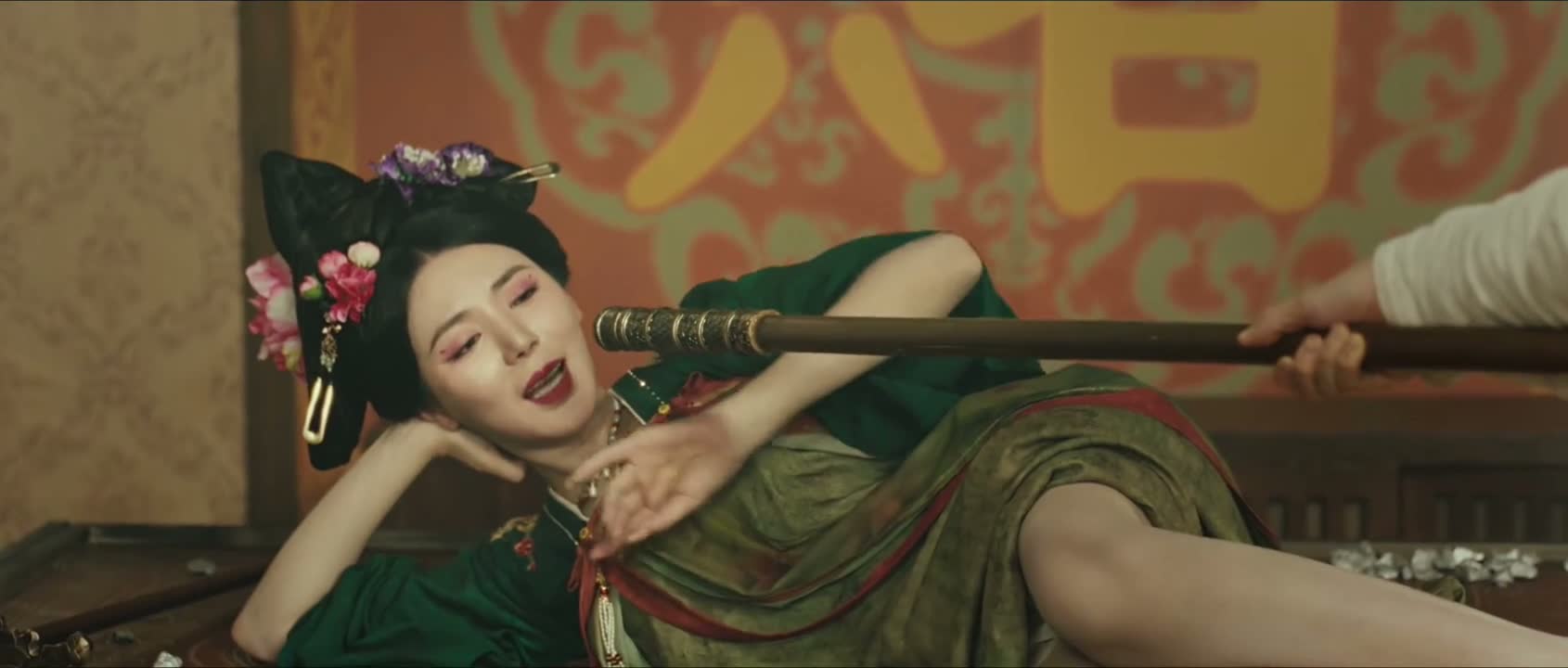
奴家等你多时了
“I've been waiting for you.”
THE DIALOGUE REEL
庞公子
“Young Master Pang,”
奴家 等你多时了
“I've been waiting for you.”
Direct spoken expression in this communicative setting.
In classical entertainment quarters, hostesses adopted humble pronouns ('nujia') and elevated greetings to flatter the male guest's status and create an inviting atmosphere.
LEARNING CHUNKS & PARTICLES
I / this humble woman
An archaic first-person feminine pronoun commonly seen in period dramas to denote modesty and traditional deference.
have been waiting for a long time
A polite classical/formal expression used when greeting a long-awaited guest.
Signifies a change of state or continuation of action up to the present moment, emphasizing the duration of waiting.
VOCABULARY & EXPRESSIONS
Parallel Spoken Cinema Scenes (语义近邻切片)

“I happen to have”
“I will return your money in full right away.”

“I shall take my leave now.”

“Not only do I have a lovely figure, I'm also quite strong!”

“Besides, Changning is waiting for you at home.”

“I made you wait so long.”