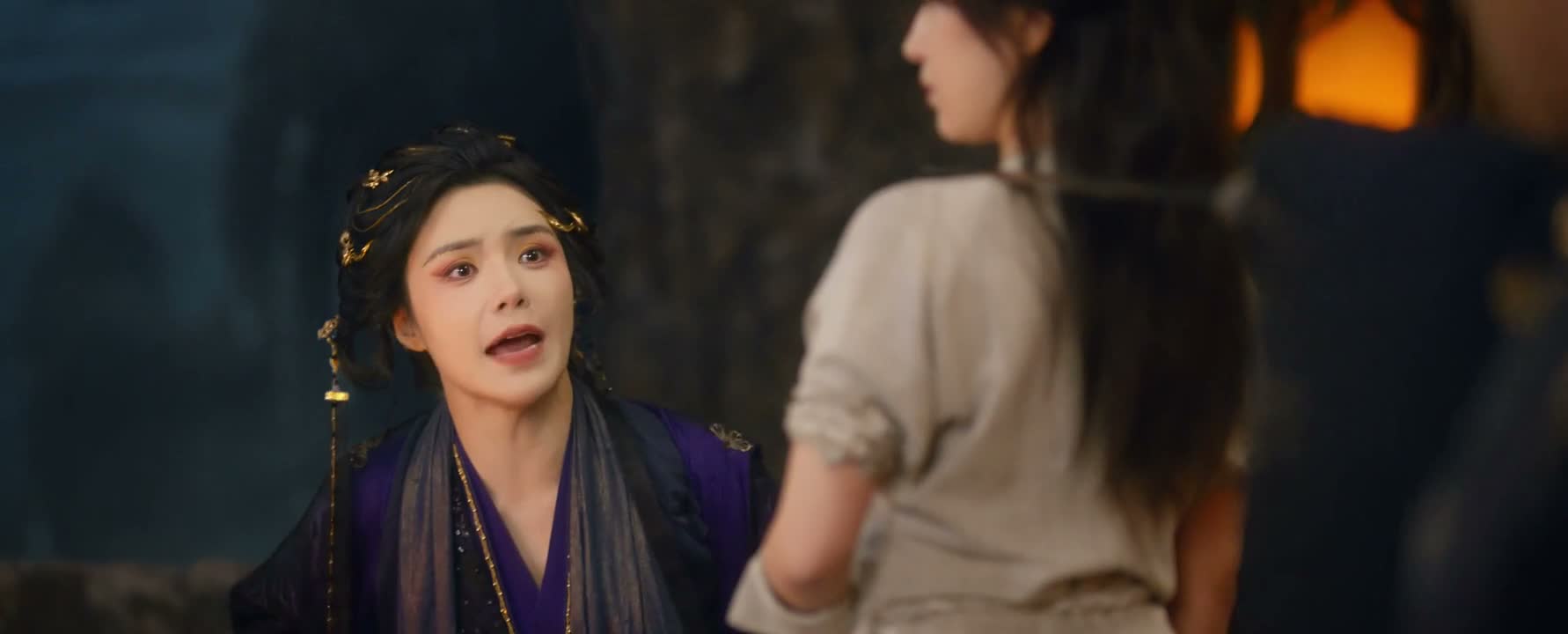
我叫你说话了吗
“Did I ask you?”
THE DIALOGUE REEL
人当事人都没说话呢
“The person involved hasn't said a word.”
我叫你说话了吗
“Did I ask you?”
先别吵了
“Stop arguing first.”
“Shut your mouth, nobody asked for your opinion!”
In Chinese disputes, asking 'Did I tell you to speak?' asserts dominance and hierarchy, aiming to strip the opponent of conversational standing.
LEARNING CHUNKS & PARTICLES
Did I ask/tell you to...?
A sharp rhetorical question used to scold someone who acted without permission or spoke out of turn.
Forms a sharp rhetorical question that functions pragmatically as a direct rebuke rather than an inquiry.
VOCABULARY & EXPRESSIONS
Parallel Spoken Cinema Scenes (语义近邻切片)

“Why aren't you saying anything? Where are you?”

“Don't talk. I'm not talking.”

“I'm talking to you! Can't you hear me?”
“Are you not even going to listen to me?”

“Are you listening?”

“I'm talking to you.”