不要浪费这个钱了
“Don't waste your money on this.”
THE DIALOGUE REEL
你啊
“Don't waste your money on this.”
不要浪费这个钱了
“Don't waste your money on this.”
谢谢
“Thank you.”
“You really don't need to spend your money on me, but thank you.”
In Chinese social etiquette, it is customary to initially refuse gifts or financial assistance by saying 'bie lang fei qian' ('don't waste money') to show consideration and avoid appearing greedy, rather than genuinely accusing the other person of wastefulness.
LEARNING CHUNKS & PARTICLES
stop doing something / don't ... anymore
Commonly used in spoken Chinese to dissuade someone from doing or continuing an action; softer and more negotiable in tone than simply using 'bie'.
waste money / spend unnecessarily
A frequent expression used to politely decline when someone offers to pay, buy gifts, or purchase expensive items.
Placed at the end of a sentence to indicate dissuasion, a change in situation, or an urge to stop an intended action.
VOCABULARY & EXPRESSIONS
Parallel Spoken Cinema Scenes (语义近邻切片)
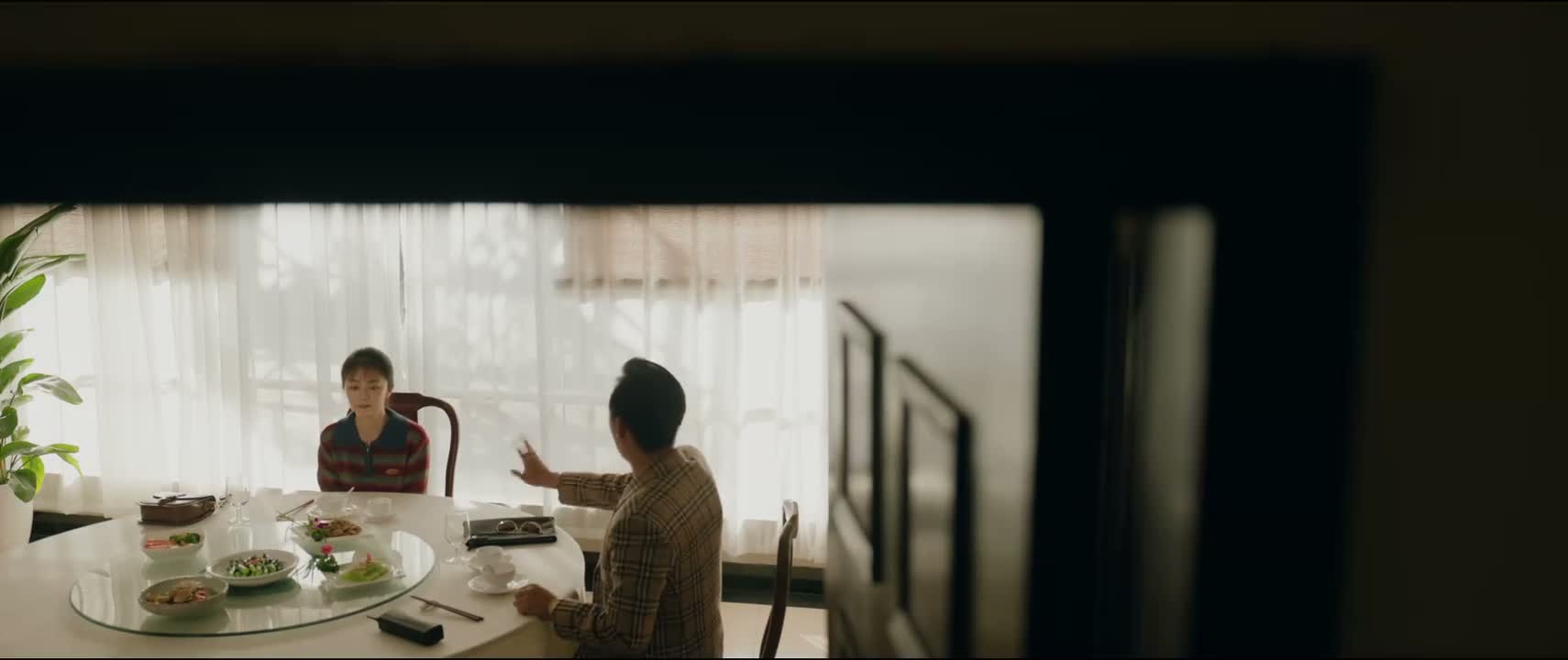
“you don't need to save me money.”

“Even if there is, it's not worth that much.”

“Got it. I'll have to be frugal.”