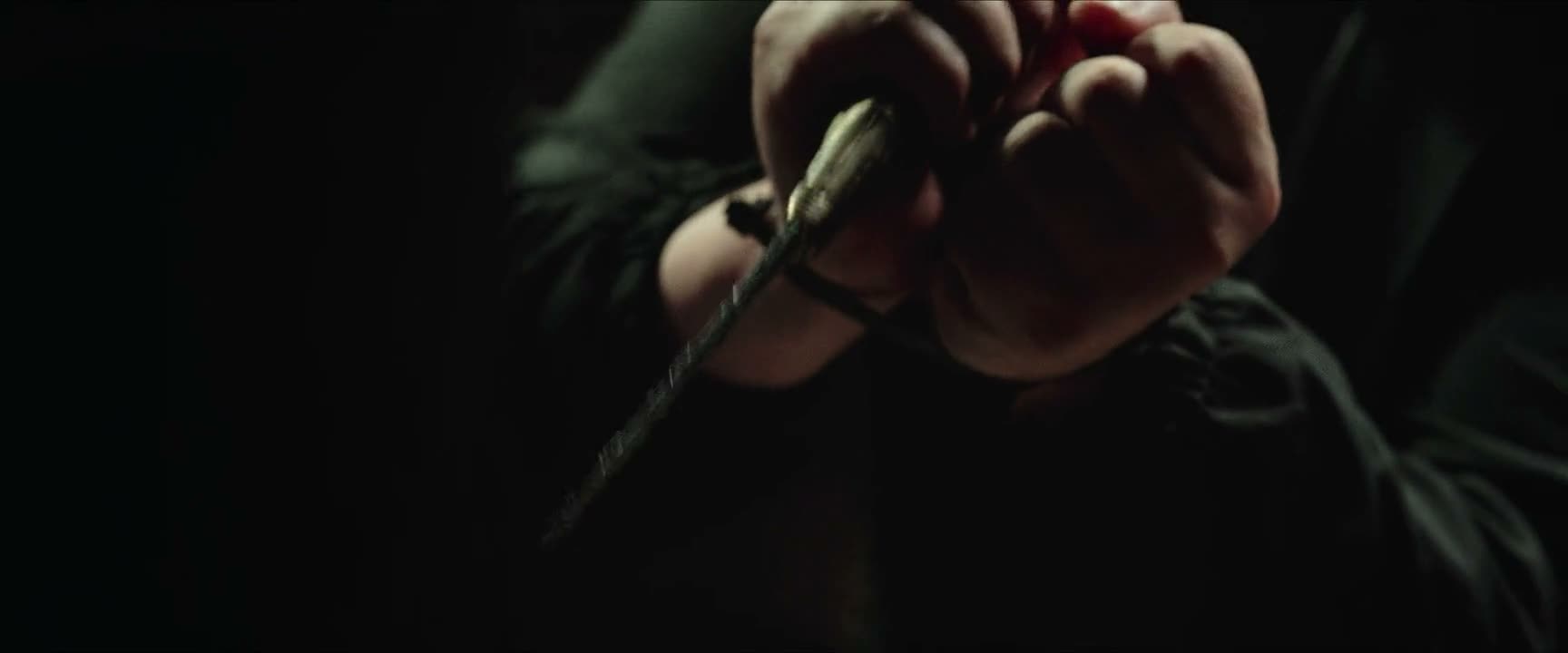
我王八蛋 我 我 我对不起她
“I'm a bastard. I... I'm sorry to her.”
THE DIALOGUE REEL
我 王八蛋 我 我 我对不起 她
“I'm a bastard. I... I'm sorry to her.”
“-She's such a good woman. -I failed her. But you beat her like this.”
“I'm a complete scumbag, I've failed her so badly, and it kills me to see what you've done to her.”
A traditional Chinese profanity originally referring to someone shameless or morally degenerate. In spoken language, it carries strong insulting and venting force; when used to refer to oneself, it reflects a state of utter despair, profound regret, and acute self-reproach.
LEARNING CHUNKS & PARTICLES
a vulgar insult referring to a despicable, contemptible, or morally corrupt person (bastard/scoundrel)
A highly offensive spoken profanity; here used as self-directed abuse out of extreme self-blame.
to apologize or feel guilty, conveying that one has let someone down (I'm sorry)
A standard apology; when spoken with intense emotion or repeated, it conveys profound guilt and grief.