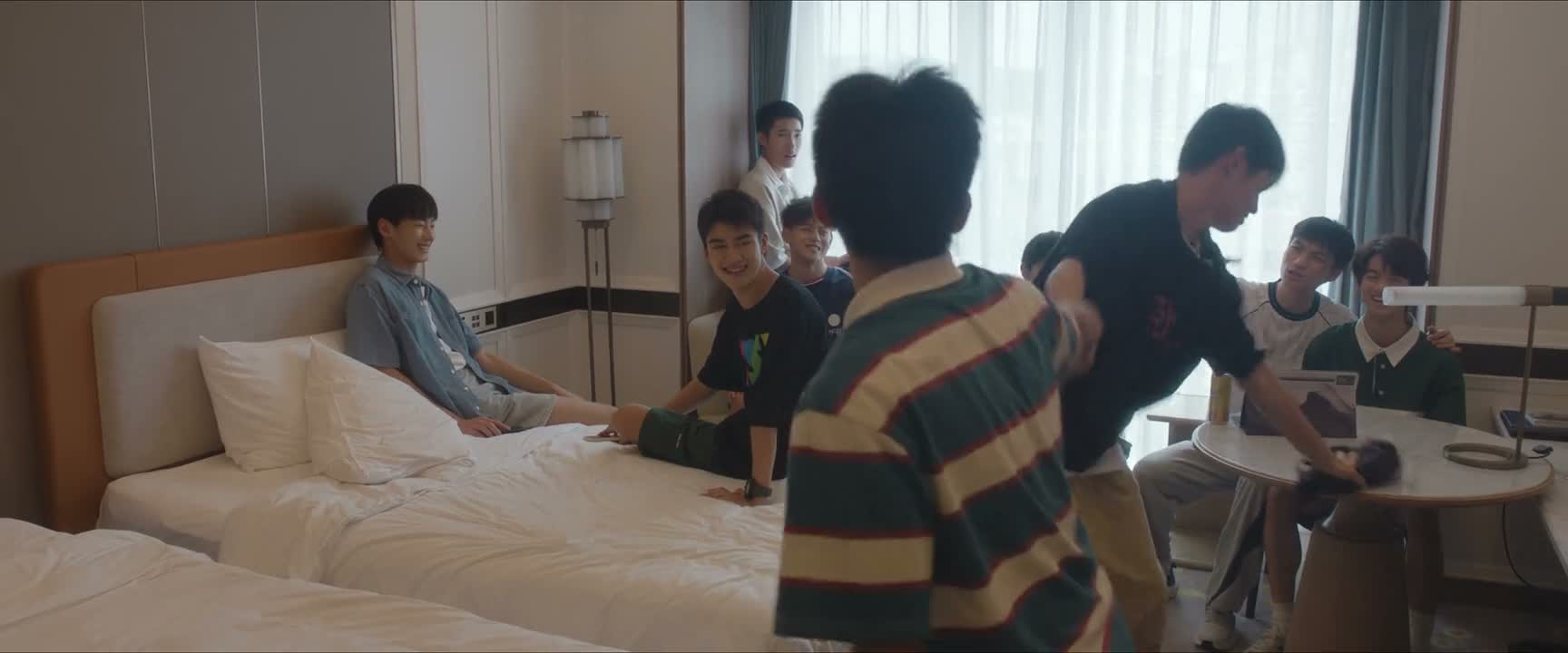
那我可不客气了啊 那个巧克力我要了
“(To Yu: gentle wind, romantic flowers.) Really? (You are special. I like you. - Jun) I will. I'll take those chocolates.”
THE DIALOGUE REEL
“Take whichever one you like. (To Yu: gentle wind, romantic flowers.) Really?”
那我 可不 客气了 啊 那个 巧克力 我要了
“(To Yu: gentle wind, romantic flowers.) Really? (You are special. I like you. - Jun) I will. I'll take those chocolates.”
来 拿走
“Here, take them.”
Direct spoken expression in this communicative setting.
Chinese culture values politeness ('keqi'), but being overly polite among close acquaintances can create emotional distance. Saying 'na wo ke bu keqi le' ('then I won't stand on ceremony') both acknowledges the other person's goodwill and signals a close, unpretentious relationship.
LEARNING CHUNKS & PARTICLES
to not stand on ceremony; to not hold back
When accepting an offer, gift, or treat, saying 'na wo ke bu keqi le' expresses gracious acceptance while bringing people closer.
to choose or take something
Used colloquially to make a decisive choice, meaning 'I'll take this one' or 'this one is mine'.
Softens the tone at the end of a sentence, adding a friendly, casual, and attentive feel.
Indicates a change of state upon making a decision, as in 'I'll take it'.